
Reviewed · SNORKELING WITH TURTLES
Tenerife First Time Scuba Dive – Turtle Habitat, Small Groups
If you’ve ever wanted to try scuba, this is a clean first step. You get a safety-first start at Puerto Colón, a short tank session at a max 7 meters, and then a snorkel safari where sea turtles are possible. The big plus: everything is handled for you, from wetsuit to gear, with PADI-style instruction that keeps first-timers calm.
I especially like the time structure. You spend about 25–30 minutes underwater with an instructor and add a 30-minute snorkeling segment afterward, so you get both skills and wildlife time without the day dragging.
One drawback to plan for: turtle sightings are never guaranteed. Even when conditions are good, the animals pick their own schedule.
In This Review
- Key things that make this worth it
- Tenerife’s first-timer scuba setup: what the 2.5 hours is really designed to do
- Where you start: the PADI 5 Travel Sub dive base and the pre-water moment
- The boat trip and the run to the underwater site: quick, fun, and not too long
- Underwater session at 7 meters: how the instruction is paced for confidence
- Snorkeling safari afterward: warm lagoons, fish variety, and turtle chances
- Gear and wetsuit: included, plus a comfort factor you’ll feel immediately
- Small groups and named instructors: why the staff attention shows up in the results
- Value for money: what $90.70 buys you, and what it doesn’t
- Who should book this, and who should think twice
- My booking call: should you do this first-time scuba in Tenerife?
- FAQ
- How deep do you go during the scuba session?
- How long is the scuba and snorkeling time?
- Is equipment included?
- Is there a chance to see sea turtles?
- Are underwater photos or videos included?
- What language is the experience in?
- How big is the group?
- Are children allowed to participate?
- Are there health restrictions?
- How long should you wait before flying after scuba?
- What if the weather isn’t good?
Key things that make this worth it
- Beginner-friendly depth limits (max 7 meters / 23 feet) that match a first experience
- Small-group feel with a max of 20 travelers, and many dives run with tight instructor-to-student ratios
- All equipment included, plus a wetsuit, so you skip rental stress
- Short, guided in-water coaching (tank setup and skill checks happen with staff nearby)
- Scuba + snorkeling in one trip, so you’re not forced to choose one or the other
- Marine life is weather-dependent, including fish variety and turtle chances
More dives along the Tenerife coast
- Southern Tenerife: 50-Minute Submarine Dive★ 4.8 · 2,216 reviews
- Tenerife: Your First Scuba Diving Experience in Turtle Area★ 4.7 · 1,679 reviews
- Tenerife: Beginner’s Dive at a Spot with Turtle Sightings★ 4.7 · 627 reviews
- Tenerife First Time Scuba Dive – Turtle Habitat, Small Groups★ 4.5 · 456 reviews
Tenerife’s first-timer scuba setup: what the 2.5 hours is really designed to do
This is built for people who are new to scuba and want the experience to feel controlled, not chaotic. The schedule is short enough to be doable on a holiday day, but long enough that you actually learn how scuba feels in your body: breathing rhythm, buoyancy basics, and moving underwater without panic.
The format also makes sense. You start with paperwork and a safety briefing, you get suited up and geared, you do a short guided underwater session, and then you switch to snorkeling for a second way to see the sea. That mix is a smart way to build confidence, because you’re not judged on one single activity.
And the small-group cap helps. With a maximum of 20 travelers, your instructor doesn’t have to rush everyone into one big herd. In real-world terms, that usually means more attention during the moments that matter most: fitting gear, checking comfort, and answering quick questions.
Where you start: the PADI 5 Travel Sub dive base and the pre-water moment
Your meeting point is the PADI 5 Travel Sub Dive Center Tenerife at Calle Colón, s/n, Escuela Nautica, in Costa Adeje. You’ll also be near public transportation, which is handy if you’re not driving.
Before anything leaves the dock, you’ll handle paperwork and a safety briefing at the base. Expect the staff to go over what you’ll do and how to do it. In reviews, people describe a short classroom-style explanation before getting on the boat, which is exactly what you want on a first try. It helps you know what’s next, so the first in-water moment doesn’t feel like a surprise test.
Then you get kitted up. The wetsuit and full scuba equipment are included, so you’re not standing around wondering if your rental size is right. This matters because fit affects comfort instantly—especially when you’re learning how to breathe steadily while your body is cold and slightly compressed.
The boat trip and the run to the underwater site: quick, fun, and not too long
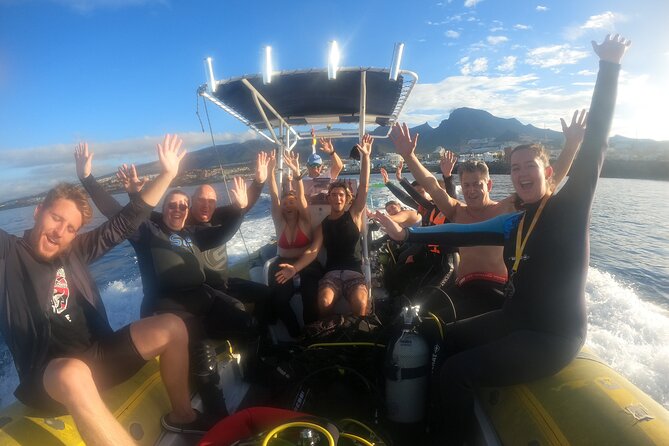
Next comes the boat ride to the site. Reviews consistently describe it as fast and exciting—something you can enjoy even if you’re nervous about the water. The ride itself is part of the pacing: it gives you a mental reset between the “classroom” part and the “gear-in-water” part.
You’re not going out for hours. The whole experience is about 2 hours 30 minutes total, so the boat time doesn’t steal the day. That’s a real value point because many first-timer tours spend half the time simply getting from A to B.
Also, the structure reduces decision fatigue. You don’t need to manage anything once you’re onboard. The crew handles tank setup and keeps the group moving. One review notes that tanks are put on in the water, which tends to lower stress because you’re not carrying gear through chaos on the boat deck.
Underwater session at 7 meters: how the instruction is paced for confidence
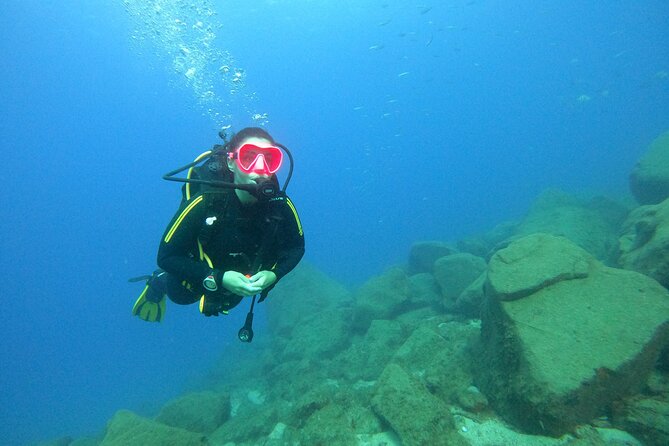
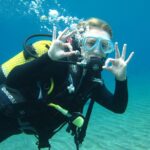
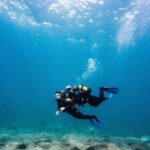
The scuba time is short on purpose: you’ll be underwater for about 25–30 minutes, guided by a PADI instructor. And there’s a clear depth limit—no deeper than 7 meters (23 feet). For beginners, that’s huge. It keeps the plan within a zone that feels safe while you learn control and breathing.
Instructors run the session in pairs or very small groups, and the guidance is hands-on. Multiple reviews name instructors like Romana, Francesco, Toby, and Martin, and they all mention a similar theme: constant checking for comfort, reassurance when nerves spike, and patient pacing as you learn.
One review mentions that fear can feel very real at the start—people might hyperventilate or think they can’t do it. The best takeaway for you is simple: listen closely, slow your breathing, and trust the instructor’s pace. Your job is not to be a superhero underwater. Your job is to follow the steps until it clicks. Once you’re steady on the seabed, that fear often disappears fast.
Other spots where the turtles gather
Snorkeling safari afterward: warm lagoons, fish variety, and turtle chances
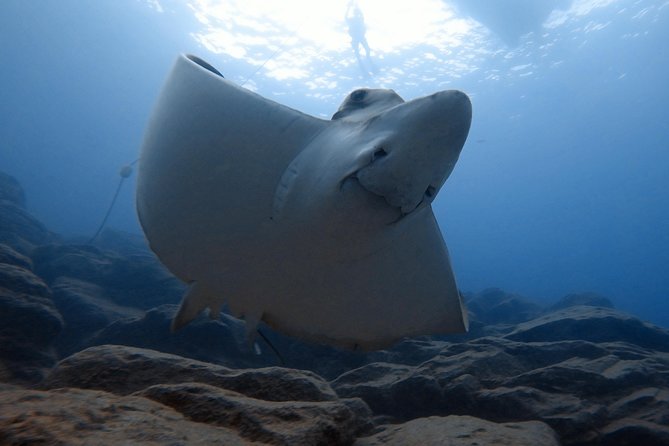
After the tank segment, the experience switches to snorkeling with a mask and tube for about 30 minutes. This is where you get a different kind of freedom: no heavy buoyancy workload, just floating and looking around.
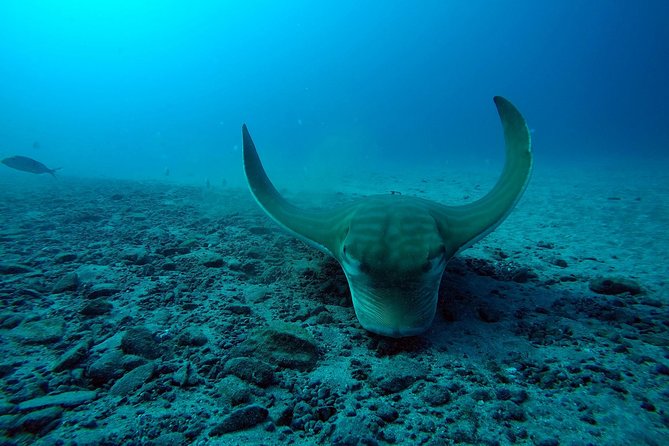
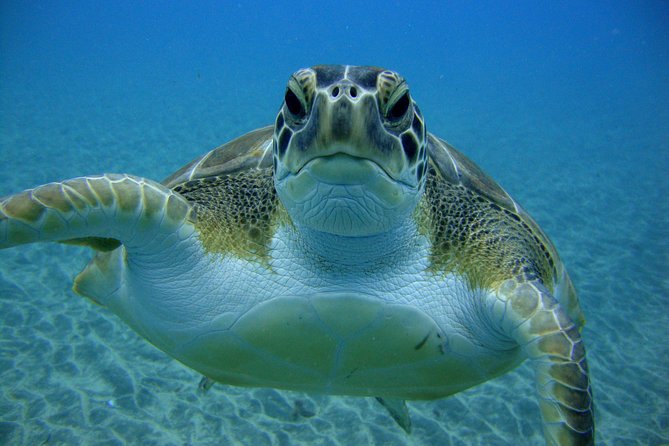
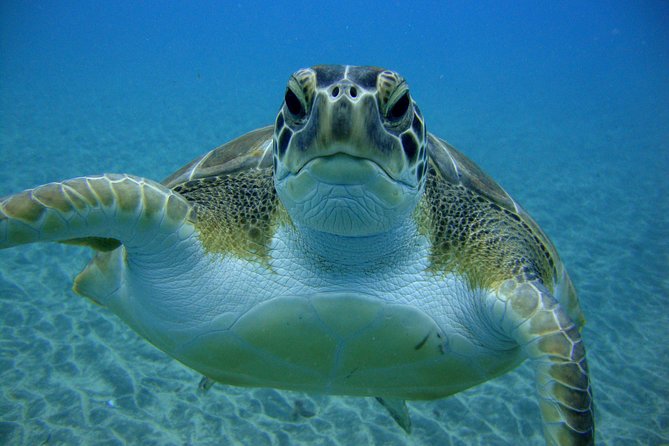
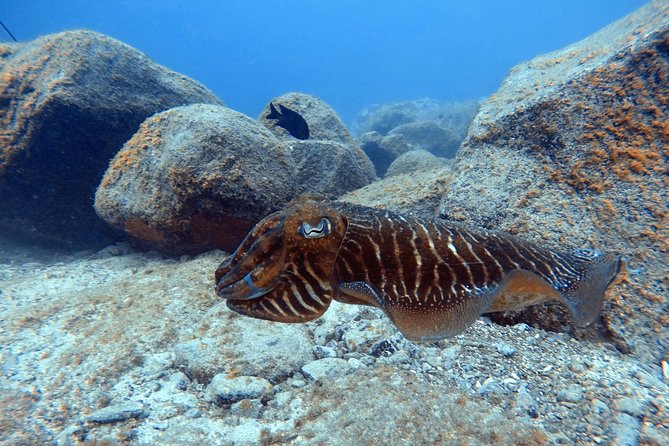
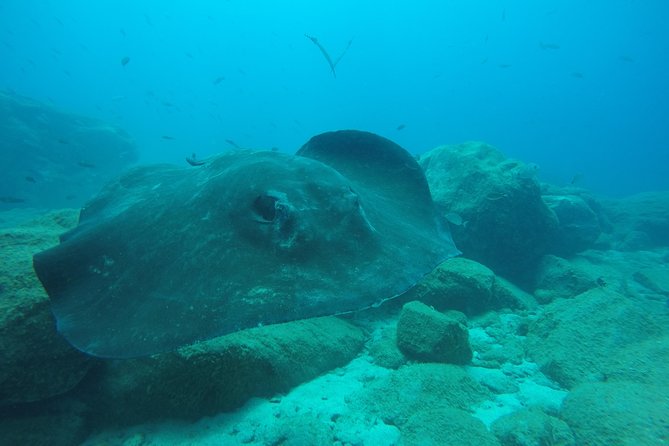
The snorkeling part happens in the Canary Islands’ warm lagoons, and the marine life can be colorful. In some cases, you might even see sea turtles. But there’s a key detail you should take seriously: the provider can’t give a 100% guarantee of turtle sightings. Several reviews mention that turtles were not spotted, even though the staff felt they were doing everything right.
So, how should you frame it? Treat turtle sightings as a bonus, not the goal. If you go in expecting fish, seabed life, and a calm guided session, you’ll usually be happy even when turtles stay out of sight.
Gear and wetsuit: included, plus a comfort factor you’ll feel immediately
This tour includes full equipment and a wetsuit, which is a big deal for beginners. When everything is included, you lose fewer hours to logistics—no searching rental shops, no guessing sizes, no last-minute surprises.
It’s also easier to stay relaxed. Your brain can focus on learning scuba, not on troubleshooting gear problems. That’s especially valuable because first-timers often struggle most with coordination, not with strength.
You also get bottled water, plus full insurance. Insurance isn’t thrilling, but it’s part of good planning. For a water activity, it adds a layer of risk management that makes the day feel less stressful.
Small groups and named instructors: why the staff attention shows up in the results
This is one of the highest-praised parts of the experience. The overall rating is strong, and the reviews repeatedly bring up the same qualities: friendly staff, clear explanations, and instructors who check on you constantly.
You’ll see several names come up in feedback—Romana, Francesco, Toby, Martin, Elena (mentioned as part of the staff/crew), and others. Even when turtle sightings don’t happen, people still rate the trip highly because the coaching feels safe and personal.
There’s a practical pattern worth knowing:
- Expect step-by-step instruction before you go in.
- Expect instructors to keep close to each pair or small group.
- Expect the crew to create a positive atmosphere on the boat and at the base.
That combination matters because scuba is partly skill and partly nerves. If you’re someone who gets anxious around new physical experiences, this type of support is what turns it into a win instead of a setback.
Value for money: what $90.70 buys you, and what it doesn’t
At $90.70 per person, the value comes from what’s already included. You’re not paying extra for the wetsuit, the gear, the instructor, the boat trip, or the core timing underwater and snorkeling.
You also get:
- a guided underwater session at controlled depth
- snorkeling time afterward
- bottled water
- full insurance
What’s not included is photos and videos. The data explicitly says photos/videos aren’t included, but reviews do mention staff taking underwater pictures during the experience. Some note photos were available afterward for purchase, and one review mentions photos/videos being emailed. The safest way to plan is this: assume photography is offered as an add-on, not included in the base price.
If you’re comparing against DIY options, the savings can be real. Rental gear alone can cost a noticeable amount, and you’d still need a teacher and a managed plan with safety briefings. For a first scuba try, paying for the full setup usually wins.
Who should book this, and who should think twice
This experience says most travelers can participate, and the structure is clearly designed for first-timers. If you’re curious about scuba but don’t want to commit to a full certification course today, this is a strong way to test the water—literally.
It’s also a good fit if you want both experiences in one go: tanks underwater plus snorkeling. You’ll feel more complete leaving the day, because you’re not just “doing the training.” You’re also seeing marine life from two angles.
Hard stops from the provided rules:
- Pregnant women cannot participate.
- If you have heart or lung conditions, pneumothorax, or diabetes, you must present a doctor’s certificate on the day of the activity, and no refunds are provided if required documentation isn’t shown.
- Children under 8 cannot scuba.
- Children 8–9 can do a maximum depth of 4 meters.
- Children under 16 must show identification.
- Minors under 15 must be accompanied by an adult (with extra charge).
- There’s also a planning rule: you should allow at least 12 hours between this underwater session and any flight (or mountain trip).
If you’re unsure where you fit, your best move is to check your situation against those limits before booking.
My booking call: should you do this first-time scuba in Tenerife?
Yes, I’d book it if:
- you want a beginner-guided underwater introduction with a max depth of 7 meters
- you like the idea of gear + wetsuit included
- you want a short, well-structured day with both scuba and snorkeling
- you care more about feeling safe and confident than chasing turtles on command
Skip or rethink it if:
- turtle sightings are your only motivation. They’re possible, but not guaranteed.
- you’re close to a flight and can’t meet the 12-hour spacing rule.
- you fall into any of the health or participation limits listed above.
Overall, this is one of those tours where the value is in the setup: clear instruction, controlled conditions, and staff attention that keeps the first underwater moments from turning into a scramble.
FAQ
How deep do you go during the scuba session?
The scuba experience is conducted no deeper than 7 meters (23 feet).
How long is the scuba and snorkeling time?
You’ll spend about 25–30 minutes scuba with the instructor and about 30 minutes snorkeling with mask and tube.
Is equipment included?
Yes. Full equipment and a wetsuit are included.
Is there a chance to see sea turtles?
There is a chance, but the provider cannot guarantee turtle sightings.
Are underwater photos or videos included?
No. Photos and videos are not included.
What language is the experience in?
The tour offers English. Briefings are provided in all the languages listed, and dives can be conducted with an available instructor speaking English.
How big is the group?
The activity has a maximum of 20 travelers.
Are children allowed to participate?
Children under 8 years old cannot scuba dive. Children between 8 and 9 can do a max depth of 4 meters. Children under 16 must show identification. Minors under 15 must be accompanied by an adult with an extra charge.
Are there health restrictions?
Pregnant women cannot participate. People with heart or lung conditions, pneumothorax, or diabetes must present a doctor’s certificate on the day of the activity, and no refunds are provided if documentation isn’t presented.
How long should you wait before flying after scuba?
It should pass at least 12 hours between the underwater session and a flight (or a mountain trip).
What if the weather isn’t good?
This experience requires good weather. If it’s canceled due to poor weather, you’ll be offered a different date or a full refund.
More Tour Reviews in Tenerife
- Siam Park Entry Tickets
★ 4.5 · 15,710 reviews - Tenerife: Eco-Yacht Whale and Dolphin Watching and Swimming
★ 4.7 · 15,619 reviews - Los Cristianos Respectful No-Chase Whale and Dolphin Safari
★ 4.6 · 12,782 reviews - Tenerife: Loro Parque Entry Ticket
★ 4.8 · 12,411 reviews - Loro Parque and Siam Park Combined Admission Tickets
★ 4.7 · 7,307 reviews
Where Else to Snorkel with Turtles
- Tenerife: Kayak and Snorkel with Turtles, Wetsuits Included
★ 4.6 · 7,215 reviews - Tenerife: Kayak Safari and Snorkel in a Marine Reserve
★ 4.5 · 3,214 reviews - Tenerife: Kayak & Snorkel with Local Fauna, Photos Included
★ 4.6 · 2,010 reviews - Tenerife: Your First Scuba Diving Experience in Turtle Area
★ 4.7 · 1,679 reviews - Tenerife Snorkeling boat trip in a Turtle Habitat
★ 4.1 · 1,547 reviews
More Dives Off Tenerife
- Southern Tenerife: 50-Minute Submarine Dive
★ 4.8 · 2,216 reviews - Tenerife: Your First Scuba Diving Experience in Turtle Area
★ 4.7 · 1,679 reviews - Tenerife: Beginner’s Dive at a Spot with Turtle Sightings
★ 4.7 · 627 reviews - Tenerife: Beginner Scuba Dive Experience
★ 4.8 · 238 reviews - Try Dive – PADI Discover Scuba Diving in Tenerife
★ 5.0 · 214 reviews
Just Added: Fresh Tenerife Reviews



Snorkeling with Turtles, compared.
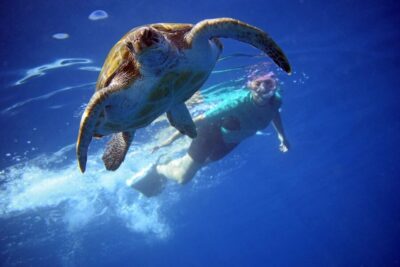 ★ 4.6Kayak and Snorkel with Turtles, Wetsuits IncludedFrom $357,215 reviews
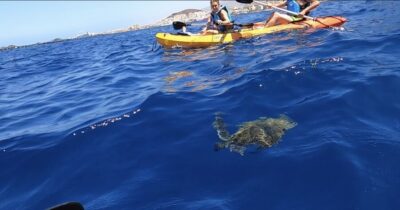 ★ 4.5Kayak Safari and Snorkel in a Marine ReserveFrom $293,214 reviews
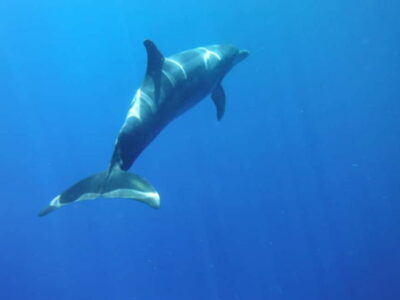 ★ 4.6Kayak & Snorkel with Local Fauna, Photos IncludedFrom $362,010 reviews
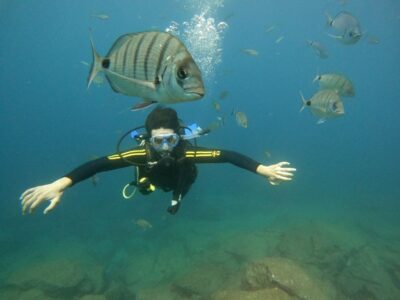 ★ 4.7Your First Scuba Diving Experience in Turtle AreaFrom $841,679 reviews
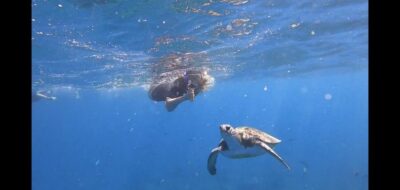 ★ 4.1Tenerife Snorkeling boat trip in a Turtle HabitatFrom $421,547 reviews
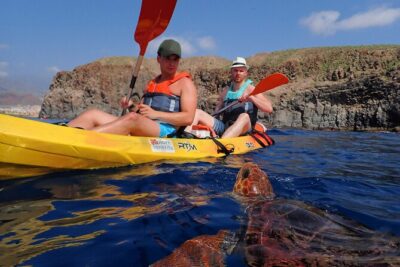 ★ 4.5Turtle & Dolphin Kayak Tour with Snorkel & WetsuitFrom $421,411 reviews
 ★ 4.8Sailboat Tour Whale Watching Food and SnorkelingFrom $70652 reviews
 ★ 4.8Kayak Sea Safari with Snorkel and SnacksFrom $41639 reviews
Browse the lists this tour appears in