
Reviewed · MOUNT TEIDE & CABLE CAR
Sunset and stargazing from Teide
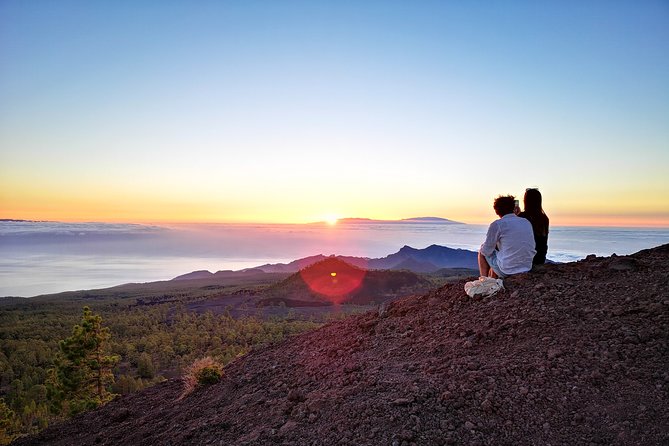
Teide turns the sunset into a science lesson. This 6-hour Tenerife outing pairs Teide National Park golden-hour views with guided stargazing in some of the darkest skies you’ll find on the island. I love that it’s not just looking up in the dark; you get real structure—constellations, star highlights, and the gear to see them.
My favorite part is the pacing: a proper dinner stop with local wine before the sky goes deep, plus scenic viewpoints that give you context for what you’re seeing later. The food at Guía de Isora is a 3-course meal, with water and soft drinks, and you can usually choose vegetarian or vegan.
One drawback to keep in mind: this experience depends on weather, and groups can be mixed by language. If you’re picky about instruction in one specific language, it’s smart to check what language your departure uses before you go.
In This Review
- Key Things You Should Know Before You Go
- Why Teide’s Sunset and Stars Feel Different Here
- The Starlight Angle: What Those Protections Mean for Your Night
- The 5:00 pm Start: How the Timing Works in Real Life
- Stop 1: Guía de Isora Dinner, Local Wine, and Quick Views
- Stop 2: Mirador de los Poleos for a Big, Wide Tenerife Sunset
- Stop 3: Queen’s Shoe Stargazing at Teide, Around 2,000 Meters
- Guides, Languages, and the Human Side of the Sky Tour
- Food and Drinks: More Useful Than You Think
- Price and Value: Is $77 a Good Deal for Teide?
- Getting the Most Out of Your Night: What to Bring
- Who This Tour Fits Best (and Who Should Skip It)
- Should You Book Sunset and Stargazing from Teide?
- FAQ
- How long is the sunset and stargazing tour from Teide?
- What time does the tour start?
- What does the ticket include?
- Where does the tour begin and end?
- Is pickup available from the north of the island?
- Do I get a dinner during the tour?
- Are vegetarian or vegan meals available?
- Where do you watch the sunset?
- Where is the main stargazing?
- What happens if the weather is bad?
Key Things You Should Know Before You Go
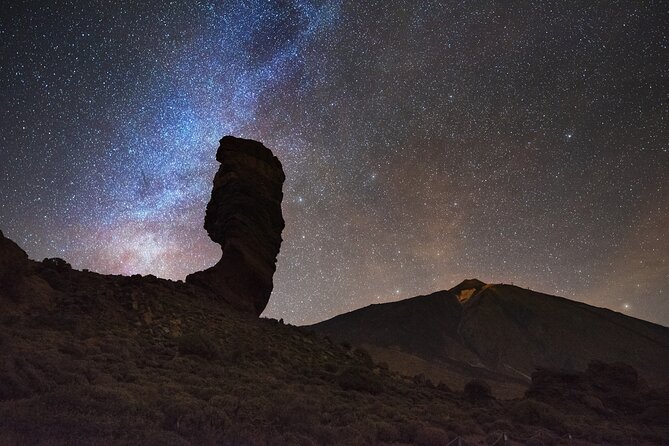
- Starlight-protected skies around 2,000 meters: Low light pollution helps make stars and constellations easier to pick out.
- Dinner + wine before the stargazing: A real sit-down meal, not just a snack, with options for vegetarian or vegan.
- Sunset viewpoint with west-island views: From the Mirador de los Poleos you can see La Gomera, La Palma, and El Hierro on a clear evening.
- Powerful telescopes at the main stargazing stop: You’re not relying only on the naked eye.
- Max group size of 55: Big enough for energy, small enough to feel organized when it’s time to look through equipment.
- Good-weather requirement: If clouds roll in, the operator may move dates or offer a full refund.
Other ways up the volcano, side by side
- Tenerife: Mount Teide Tour with Cable Car Ticket & Transfer★ 4.3 · 5,094 reviews
- Tenerife: Teide National Park Sunset & Stargazing Tour★ 4.2 · 3,812 reviews
- Tenerife: Sunset and Stargazing at Teide National Park★ 4.7 · 2,826 reviews
- Teide National Park Sunset & Stargazing with Dinner (Star Safari)★ 5.0 · 2,601 reviews
Why Teide’s Sunset and Stars Feel Different Here
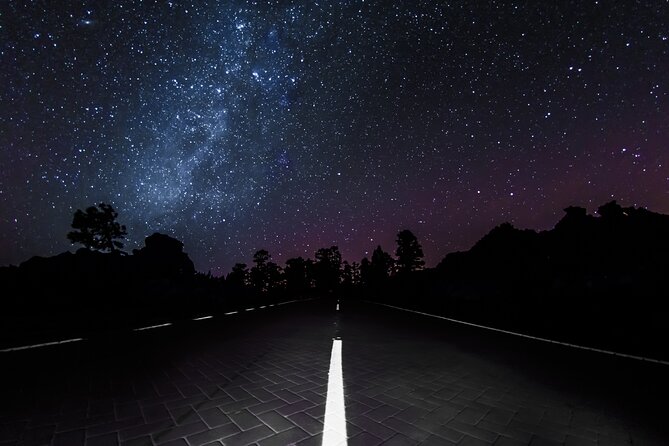
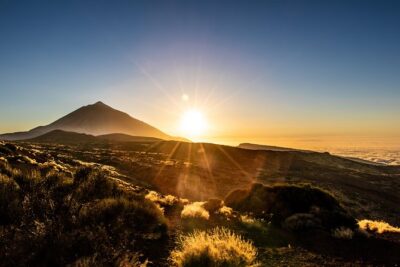
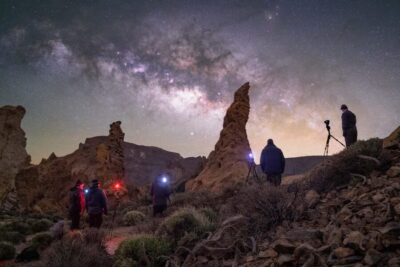
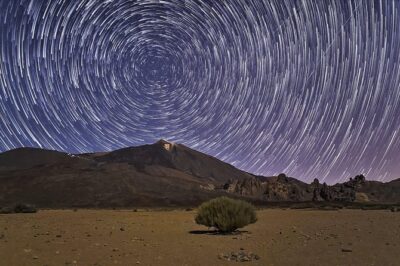
Teide National Park isn’t just scenic. It’s engineered for night-sky watching. Tenerife has a specific law to protect the darkness inside the park by limiting light pollution, and it controls flight routes over the area. Add the fact that Teide is a UNESCO World Heritage site and was recognized as a Starlight Tourist Destination and Starlight Reserve, and you get a big practical advantage: you’re far more likely to see crisp stars than you would from a brighter coastline.
For me, the appeal is the switch from warm colors to deep space. You start with a classic Tenerife sunset moment, then you pivot into a guided sky session where you learn what you’re actually looking at. It’s the difference between seeing stars and understanding them.
The “science lesson” vibe doesn’t require you to know astronomy ahead of time. They’ll point you toward constellations and bright stars, then let the telescopes do the heavy lifting.
The Starlight Angle: What Those Protections Mean for Your Night
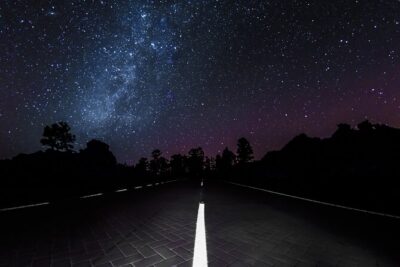
Here’s the part that actually matters to your eyes. When light pollution is controlled, your pupils don’t get forced into fight-or-flight mode by every stray glow. That’s why stargazing from Teide tends to deliver better contrast—stars stand out more, and the sky feels darker even though it’s still Tenerife.
On top of that, the tour operates at altitude (around 2,000 meters for the viewing), which usually helps with clearer air than you’d get down at sea level. You’re also in the national park, where the rules exist specifically to keep the night-sky conditions intact.
What you’ll notice during the stargazing portion isn’t just lots of stars. It’s that the guide can point to constellations and bright objects in a way that you can follow, because the sky is dark enough for the patterns to show up.
The 5:00 pm Start: How the Timing Works in Real Life
This tour starts at 5:00 pm and runs about 6 hours. That timing is the sweet spot on Tenerife: you get enough daylight for sunset viewpoints, then you transition into full night conditions for telescope viewing.
If you’re going in winter, dinner is set around 4:30 pm—so you’re eating before the sky gets fully dark. That helps you avoid the usual stargazing problem: cold + empty stomach + waiting around. You’ll be fed, warm-ish, and ready to focus once it turns night.
The tour also ends back at the meeting point, so you’re not stuck coordinating transport late in the evening.
Stop 1: Guía de Isora Dinner, Local Wine, and Quick Views
The first stop is Guía de Isora, where you’ll enjoy a 3-course meal. This is one of the best-designed parts of the evening because it gives you a comfortable “reset” before the darkness.
You’ll get local wine with the meal, plus water and soft drinks. There’s also room for dietary choices: the tour indicates you may select a vegetarian or vegan meal.
Why this matters: stargazing is slower than sightseeing. You don’t just walk around for photos. You stand, wait for your eyes to adjust, and listen. A real meal makes that easier. It also keeps the energy up earlier in the evening, when most people are still excited and chatty.
The stop includes time for the environment and a short walk with fantastic views. This is a practical benefit: even if you’re not thinking about photos, stretching your legs before the main stargazing area helps you feel less stiff once you’re standing outside under the stars.
More nights out under the Teide sky
Stop 2: Mirador de los Poleos for a Big, Wide Tenerife Sunset
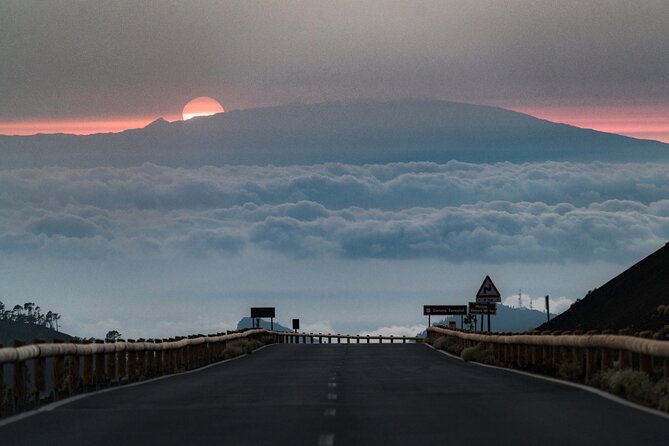
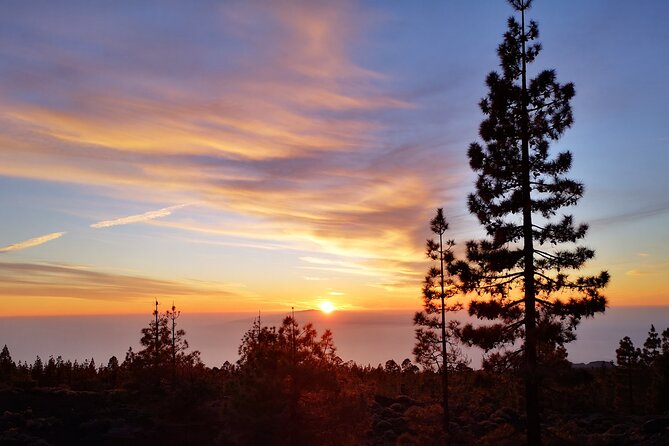
Next up is the Mirador de los Poleos, a dedicated sunset viewpoint. This stop is shorter—about 30 minutes—but it has a clear job: give you a memorable sunset, then set you up for the night-sky session that follows.
The view here is described as breathtaking, and the best part for many people is the westward perspective. On clear evenings, you can see La Gomera, La Palma, and El Hierro. That island spread is a neat way to grasp Tenerife’s position in the Canaries—like the whole archipelago is laid out in front of you.
What to watch for: sunset time can be sensitive to clouds. If you’re hoping for the classic orange strip over the horizon, check the sky when you arrive. And if the clouds look thin, keep your expectations flexible and stay ready to enjoy the moment anyway.
This stop is built for the wow-factor. Don’t plan to do anything complicated here like a long photo session with lots of gear. Keep it light, enjoy the view, then get ready for the main event.
Stop 3: Queen’s Shoe Stargazing at Teide, Around 2,000 Meters
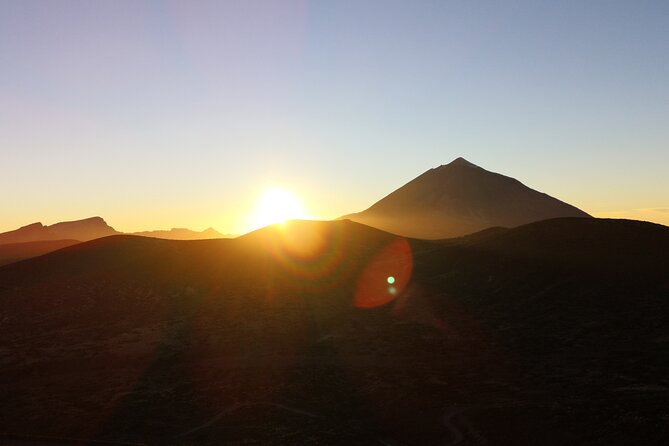
The main stargazing portion happens at Queen’s Shoe, at about 2,000 meters. This is where the tour leans into what Teide does best: low light pollution plus real astronomy tools.
You’ll spend around 2 hours here, which is long enough for your eyes to adapt and for the guide to connect what you see to specific constellations and bright stars.
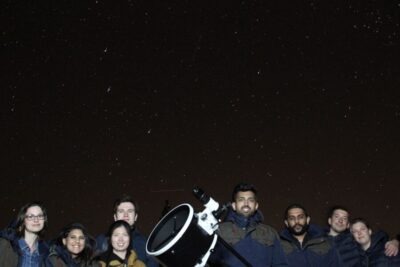
And yes, the tour uses very powerful telescopes. This matters because the naked-eye view—while spectacular—can still feel abstract if you can’t see details. Telescopes help you bridge the gap between “I see stars” and “I understand what those objects are.”
One small consideration: altitude and night air can feel colder than you expect. Dress as if you’ll be standing still for a while—because you will.
Guides, Languages, and the Human Side of the Sky Tour
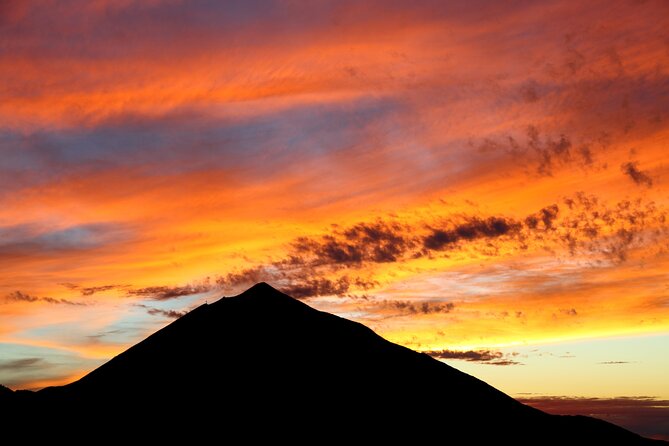
The sky can be science, but the real difference is the guide’s energy. I like that this tour is clearly built around guides who can explain what’s overhead without turning it into a lecture.
Some departures have had guides such as Ozzi or Gianmarco, and the common theme is that the guide can keep the evening fun and moving. That matters because stargazing takes patience. If the pacing is dull, you’ll lose time while you’re waiting for your eyes to adjust.
There is also one realistic note: language expectations can be a snag. One participant raised a concern about the language used early in the tour, and the response emphasized that guides handle different languages for mixed groups. Translation isn’t always perfect, and not everyone will hear the same thing in the same language the whole night.
My advice: if you have a strong preference, confirm the language for your date. If you don’t, go with the mindset that you’ll catch the main visual guidance even if the details vary.
Food and Drinks: More Useful Than You Think
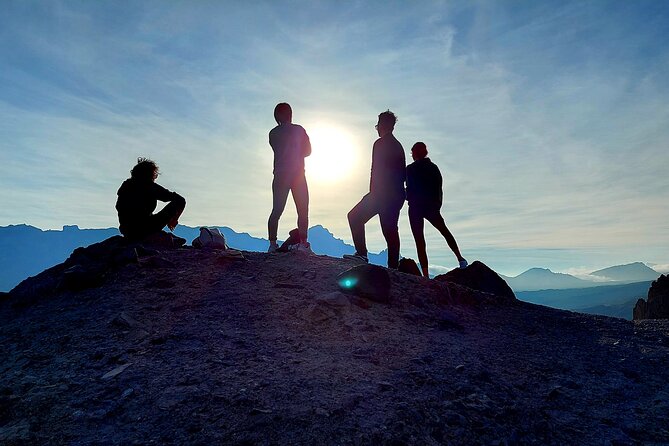
You’re getting a 3-course meal with local wine at the first stop, and then you have water and soft drinks included too. That sounds like a “nice extra,” but on this kind of tour it’s functional.
Why? Stargazing nights can stretch. You stand outside, you wait your turn at telescopes, and you keep your eyes on a dark sky instead of moving around. A heavier meal helps you stay comfortable while your body adjusts to cooler temperatures.
Also, local wine is included, so you don’t have to buy drinks separately in the middle of the day. Just keep your pacing sensible. If you want to concentrate on what the guide is showing, you’ll enjoy it more with a moderate drink plan.
Diet options are indicated as available (vegetarian or vegan). If that’s important to you, it’s worth confirming when you book so the meal matches your needs.
Price and Value: Is $77 a Good Deal for Teide?
At about $77.08 per person, this price sits in a reasonable range for a guided Teide sunset + stargazing night with a sit-down dinner and wine.
Here’s what you’re really paying for:
- Transport with air-conditioned vehicle (so you’re not driving yourself in the evening)
- A structured evening with multiple stops, not one quick viewpoint
- Dinner with wine instead of snacks
- Powerful telescopes so you get more than basic star-spotting
- A controlled group size (max 55), which helps the flow at the telescopes
Could you do the sunset and stars on your own for less? Possibly, especially if you know where to go and time it well. But you’d still be dealing with dark-sky conditions, timing, and telescope access. This tour packages the key pieces into one evening.
Where value can drop a bit: if you’re expecting private, unlimited telescope access or a guaranteed long bilingual explanation in one specific language. This is a shared guided tour, so you get the benefits, but it won’t be “custom astronomy night” for one person.
Getting the Most Out of Your Night: What to Bring
The operator doesn’t list a packing checklist, so I’ll stick to practical assumptions based on stargazing in a national park. Bring what makes standing outside easier.
- Warm layers (night air at altitude can be cold)
- A small flashlight or phone light used sparingly (so you don’t ruin your night vision)
- Comfortable shoes for walking during the dinner stop
- A light jacket you can keep on even after the sunset part
Also, keep your expectations focused on the sky itself, not just photos. Even with a great camera, night sky work has constraints. If you stay present and let your eyes adjust, you’ll enjoy it more.
Who This Tour Fits Best (and Who Should Skip It)
This tour is a great match if you want:
- A sunset with a view plus a guided star session in Teide National Park
- A dinner included with local wine
- Telescope-assisted stargazing near 2,000 meters
- An organized evening that ends back at the meeting point
You might skip it if:
- You need pickup from the north of the island (it’s not included)
- You’re deeply sensitive to language and need one specific language for the entire experience
- Weather changes would make you unhappy. The tour requires good weather, and cloud cover can affect what’s possible.
If you’re a first-timer to Teide stargazing, this is a strong starting point because it combines comfort, viewpoints, and real equipment.
Should You Book Sunset and Stargazing from Teide?
Book it if you want the classic Tenerife evening arc: sunset views, then a guided walk into darkness with help from telescopes. The dinner + wine component makes it comfortable, and the Starlight-protected conditions at Teide are a real advantage for seeing stars clearly.
Don’t book it if your priorities are different. If you’re chasing a budget-only DIY mission, you may find cheaper ways to watch the sky—but you’ll give up dinner, transport support, and telescopes.
My final take: for many people, the value is in the combination. It’s not just “stars.” It’s stars plus timing plus gear plus a meal so you don’t feel miserable halfway through the night.
FAQ
How long is the sunset and stargazing tour from Teide?
The tour lasts about 6 hours.
What time does the tour start?
It starts at 5:00 pm.
What does the ticket include?
It includes an air-conditioned vehicle, dinner (in winter around 4:30 pm), alcoholic beverages (wine), and powerful telescopes.
Where does the tour begin and end?
The activity ends back at the meeting point. The meeting point is near public transportation.
Is pickup available from the north of the island?
No. Pick up from the north of the island is not included.
Do I get a dinner during the tour?
Yes. You’ll have a 3-course meal, with local wine, water, and soft drinks.
Are vegetarian or vegan meals available?
You may choose a vegetarian or vegan meal.
Where do you watch the sunset?
One sunset stop is at Mirador de los Poleos.
Where is the main stargazing?
The stargazing is at Queen’s Shoe, around 2,000 meters.
What happens if the weather is bad?
This experience requires good weather. If it’s canceled due to poor weather, you’ll be offered a different date or a full refund.
If you tell me what month you’re going and whether you’re traveling with kids or anyone who gets cold easily, I can suggest how to time your clothing and expectations for the sunset-to-stars transition.
More Tour Reviews in Tenerife
- Siam Park Entry Tickets
★ 4.5 · 15,710 reviews - Tenerife: Eco-Yacht Whale and Dolphin Watching and Swimming
★ 4.7 · 15,619 reviews - Los Cristianos Respectful No-Chase Whale and Dolphin Safari
★ 4.6 · 12,782 reviews - Tenerife: Loro Parque Entry Ticket
★ 4.8 · 12,411 reviews - Loro Parque and Siam Park Combined Admission Tickets
★ 4.7 · 7,307 reviews
More Stargazing on the Mountain
- Tenerife: Teide National Park Sunset & Stargazing Tour
★ 4.2 · 3,812 reviews - Tenerife: Sunset and Stargazing at Teide National Park
★ 4.7 · 2,826 reviews - Teide National Park Sunset & Stargazing with Dinner (Star Safari)
★ 5.0 · 2,601 reviews - Teide National Park: Sunset & Stargazing Safari with Dinner
★ 4.6 · 2,115 reviews - Teide by Night: Sunset & Stargazing with Telescopes Experience
★ 4.5 · 1,492 reviews
Teide, a Few More Ways Up
- Tenerife: Mount Teide Tour with Cable Car Ticket & Transfer
★ 4.3 · 5,094 reviews - Tenerife: Teide National Park Sunset & Stargazing Tour
★ 4.2 · 3,812 reviews - Tenerife: Sunset and Stargazing at Teide National Park
★ 4.7 · 2,826 reviews - Teide National Park Sunset & Stargazing with Dinner (Star Safari)
★ 5.0 · 2,601 reviews - Teide National Park: Sunset & Stargazing Safari with Dinner
★ 4.6 · 2,115 reviews
Just Added: Fresh Tenerife Reviews

Mount Teide & Cable Car, compared.
 ★ 4.3Mount Teide Tour with Cable Car Ticket & TransferFrom $1025,094 reviews
 ★ 4.2Teide National Park Sunset & Stargazing TourFrom $473,812 reviews
 ★ 4.7Sunset and Stargazing at Teide National ParkFrom $472,826 reviews
 ★ 5.0Teide National Park Sunset & Stargazing with Dinner (Star Safari)From $952,601 reviews
 ★ 4.6Teide National Park: Sunset & Stargazing Safari with DinnerFrom $652,115 reviews
 ★ 4.5Mount Teide, Masca, Icod and Garachico Day TripFrom $652,065 reviews
 ★ 4.5Teide National Park Full-Day Tour with PickupFrom $661,613 reviews
 ★ 4.7Quad Adventure Tour in Teide National ParkFrom $941,492 reviews
Browse the lists this tour appears in