
Reviewed · SNORKELING WITH TURTLES
Scuba Diving in Turtle and Ray Area
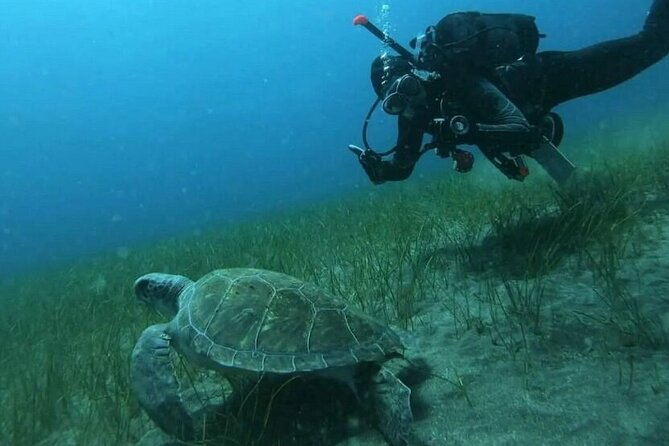
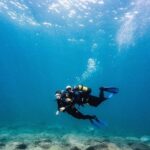
Those first underwater minutes change everything fast. In Tenerife’s Abades Bay, you get hands-on scuba training and then explore the water where rays, turtles, and even angel sharks live nearby. I like that the school keeps groups tiny—maximum two people—so your instructor can watch you closely and fix small issues before they become problems.
The two best parts are the training style and the wildlife chances. You’ll get a clear 30-minute basics walkthrough plus a safety-focused skill practice before you head out into the bay, and you’re in the area known for sting rays, butterfly rays, turtles, and colorful reef fish. One thing to consider: you can’t fly for 12 hours after your underwater session, so plan your next day’s travel carefully (and yes, that includes booking a too-early flight).
In This Review
- Key highlights you’ll care about
- Turtle-and-Ray scenery starts above the water
- The 2.5-hour plan: what happens from check-in to return
- 1) Basics briefing and what to expect (about 30 minutes)
- 2) Kitting up: gear, fit, and comfort checks
- 3) The safety practice: a few exercises before the bay
- 4) Exploring Abades Bay: rays and turtles in the same water
- Meeting point, pickup, and how to avoid the last-minute scramble
- Wildlife focus: what you’re likely to see in the Abades area
- A few animals you’ll hunt for (and why your behavior matters)
- Instructor attention: why the tiny-group format feels better
- Price and value: what $106.94 buys you on Tenerife
- Important practical catch: the 12-hour no-fly rule
- Who this works for (and who should think twice)
- Consider this if…
- Weather and the day-of reality: Tenerife’s part in your plan
- Should you book this Turtle-and-Ray underwater session?
- FAQ
- How long is the Turtle and Ray underwater session?
- How much does it cost per person?
- Is pickup available from the Abades area?
- Will there be an English briefing?
- How big are the groups?
- Do I need to worry about flying after the session?
- What happens if the weather is bad?
Key highlights you’ll care about
- Max 2 people per instructor team for more attention and less waiting around
- 30 minutes of basics + safety drills before you explore the bay
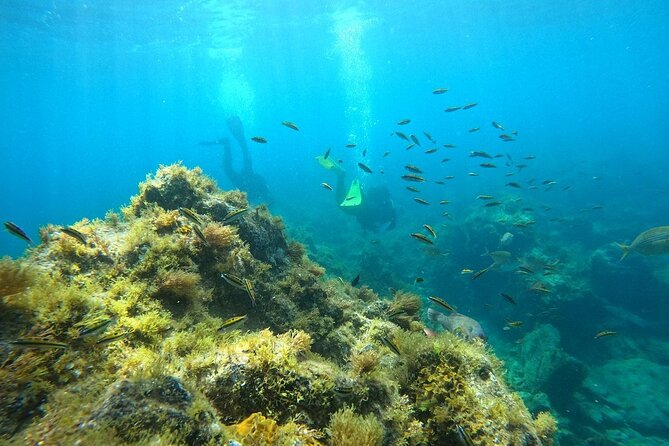
- Abades Bay wildlife area: rays, turtles, angel sharks, and reef fish
- Pickup available via a green minivan (license plate 1327 MWS) in the Abades area
- English briefing and instruction plus a straightforward, small-school feel
- Budget-friendly pricing for a guided, gear-included session at $106.94 per person
More dives along the Tenerife coast
- Southern Tenerife: 50-Minute Submarine Dive★ 4.8 · 2,216 reviews
- Tenerife: Your First Scuba Diving Experience in Turtle Area★ 4.7 · 1,679 reviews
- Tenerife: Beginner’s Dive at a Spot with Turtle Sightings★ 4.7 · 627 reviews
- Tenerife First Time Scuba Dive – Turtle Habitat, Small Groups★ 4.5 · 456 reviews
Turtle-and-Ray scenery starts above the water
If you picture Tenerife as beaches and views, this is the add-on that makes the island feel bigger. Abades Bay is right by the water training base, so you’re not spending half your day commuting to far-flung sites. That matters because your energy stays focused on what you came for: getting comfortable in scuba gear and then seeing life underwater.
What makes this area special is the mix of animals you might encounter close to the start point. You’re aiming for sting rays and butterfly rays, plus turtles and angel sharks, along with lots of colorful reef fish. Even if you don’t get everything on your wish list, the water here is the main event, not the long travel day.
The other big plus is the format. Small groups (up to two travelers) mean your instructor can help you get your breathing, buoyancy, and comfort right while it’s still easy to adjust. That’s how you make your time enjoyable instead of stressful.
The 2.5-hour plan: what happens from check-in to return
This is a 2 hours 30 minutes session, give or take based on how the water conditions feel that day. The schedule is simple: learn basics, gear up, practice safety skills, then explore the bay together with an instructor.
1) Basics briefing and what to expect (about 30 minutes)
Before you touch any scuba gear, you get walked through the core stuff. Expect the instructor to explain how the equipment works, what signals to use, and how the plan will work once you’re in the water. You’ll also get a heads-up on what to expect underwater so your brain isn’t trying to figure it out while you’re breathing through a regulator.
This matters because confidence is half the job. When someone explains the flow clearly—what happens first, what you should feel, and what to do if something feels off—you spend less time guessing and more time noticing fish and rays.
2) Kitting up: gear, fit, and comfort checks
Then it’s gear time. You’ll be fitted with scuba equipment and helped to get it set right for your body. A good fit affects everything: how easy it is to equalize pressure, how stable you feel in the water, and how much you can focus on the underwater scenery.
The session is offered in English, so you can ask questions in a language you’ll understand quickly. That’s a small detail that can make a big difference if you’re new.
Other spots where the turtles gather
3) The safety practice: a few exercises before the bay
Once you’re suited up, you’ll do a short series of in-water exercises. These are designed to make sure you’re safe and comfortable—basically, you learn the motions you’ll need while staying calm. With a maximum group size of two, your instructor can give more specific feedback than you’d get in a larger class.
This is also where you learn the basics of control: how to move without stirring up the bottom, how to manage breathing, and how to follow instructions without racing.
4) Exploring Abades Bay: rays and turtles in the same water
After the practice, you move into the bay area where marine life is the point of the session. You’re set up to look for sting rays and butterfly rays, and there’s a real chance to spot turtles. Angel sharks are also part of the potential sightings, along with colorful reef fish.
Here’s a practical tip that keeps the experience smooth: move slowly and keep your hands controlled. In places where rays and turtles hang around, calm movement helps you see more without stressing the animals.
Meeting point, pickup, and how to avoid the last-minute scramble
The meeting point is at C. 16 de Mayo, B8, 38588 Abades, Santa Cruz de Tenerife, Spain. The activity ends back at the same place, so you’re not dealing with a complicated return plan.
If you opt for pickup, it’s a green minivan with the license plate 1327 MWS. Pickup is a big win if you’re not staying nearby or you’d rather spend energy on the water than on navigation.
Opening hours are listed as 9:00 AM to 5:00 PM, with the described operating window running from 09/30/2026 to 11/30/2026. In real-world terms, that’s your cue to plan your day so you’re not rushing across the island right before your session.
Also note: you’ll receive confirmation at booking, and the tour uses a mobile ticket. That’s helpful because you don’t need to hunt for paper or deal with last-second misunderstandings.
Wildlife focus: what you’re likely to see in the Abades area
This is the core reason to pick this session, and the details are clear. The bay is described as home to sting rays, butterfly rays, turtles, angel sharks, and colorful reef fish. That combination is why people end up talking about it long after the gear comes off.
From the way the experience is described, the wildlife isn’t treated like a random bonus. It’s the planned payoff after the safety practice. So if you’re the type who loves animals but also wants structure, this format works well.
A few animals you’ll hunt for (and why your behavior matters)
- Sting rays and butterfly rays: They tend to reward patience. If you move fast or chase, you’ll miss the moment when they feel relaxed enough to show up clearly.
- Turtles: You’re looking in the same water where people have specifically reported sea turtles. Slow scanning helps.
- Angel sharks: These can be more subtle, so focus on careful looking rather than quick splashes.
- Reef fish: This is where the color comes in. Even if the bigger sightings don’t happen, you’ll still be surrounded by fish life.
One more practical note: bring a relaxed attitude. Underwater sightings are real, but they’re not guaranteed. The best way to improve your odds is also the simplest: follow your instructor’s guidance and keep a steady pace.
Instructor attention: why the tiny-group format feels better
If you’ve ever tried a class where the instructor is talking to a crowd, you know the problem. You hear the rules, but you don’t know if you are doing it right until something goes sideways.
Here, the instructor support is built around a small maximum of two travelers. That makes a visible difference. People highlight staff who are professional, patient, and friendly, and the feedback names instructors such as Levi, Csaba, and Levente for support and expertise. Others also mention Kelsey, Chris, and Jack as part of the team.
That’s not just nice-to-have. A calmer instructor style helps you master the basics faster, which means you spend more time enjoying the bay instead of worrying about your gear.
Price and value: what $106.94 buys you on Tenerife
At $106.94 per person for a roughly 2.5-hour session, you’re paying for more than a short water stop. You’re paying for:
- an English-language basics briefing,
- scuba gear fitting,
- in-water safety practice,
- and guided exploration of a wildlife-rich bay.
The value angle is that you’re not just getting a rental or a generic group activity. This is structured training with a wildlife objective, plus the small-group approach that reduces “waiting your turn” time.
If you’re comparing options, look at three things:
- How many people are in the water with one instructor
- whether gear and instruction are included
- how close the water is to the base (less travel usually means more time for learning and seeing)
Based on the described format, this one hits those value markers.
Important practical catch: the 12-hour no-fly rule
You can’t fly for 12 hours after your underwater session. That’s a strict rule for comfort and safety after changing pressure underwater.
So here’s my advice: check your flight plan before you book. If you’re leaving Tenerife the day after, make sure your flight time gives you the full buffer. If you’re not sure, plan to have at least a late-morning or afternoon departure the next day, not an early-morning hop.
Who this works for (and who should think twice)
Most travelers can participate, and people describe it as a safe, first-timer-friendly experience. If you’re new, you’ll appreciate the basics walkthrough, the gear support, and the exercises that help you get comfortable before you’re out in the bay.
It also makes sense if you want a personal feel. One of the strongest themes is that the experience is small and not a big, chaotic group.
Consider this if…
If you have tight travel timing, the 12-hour no-fly rule may be the deal-breaker. Also, this activity requires good weather. If conditions are poor, you’ll be offered another date or a full refund, but you don’t want your schedule to be so locked that you can’t flex.
Weather and the day-of reality: Tenerife’s part in your plan
The operation depends on conditions. That doesn’t mean it’s unreliable; it means the organizers care about safe water conditions. In practice, Tenerife often gives options, but you’ll still want a plan B for your schedule.
If weather cancels the session, you won’t get stuck. You’ll either reschedule or receive a full refund, which is a decent safety net.
Should you book this Turtle-and-Ray underwater session?
Yes, if you want a structured scuba training experience with a wildlife payoff, and you like the idea of small groups where you get real attention. It’s especially worth it if your goal is to see sting rays, butterfly rays, turtles, angel sharks, and colorful reef fish in the Abades Bay area without spending your day on transport.
Book it if:
- you want patient, friendly coaching in English,
- you’re okay with the 12-hour no-fly rule,
- and you can be flexible with weather.
Skip it or rethink if:
- your flight timing is too tight right after the session,
- you have no flexibility for a weather change,
- or you’re looking for a huge group party vibe. This is built for personal instruction, not crowds.
If you line up your travel day with that flight rule, this is one of the more sensible ways to add genuine underwater wildlife to a Tenerife trip—gear on, safety first, then a calm explore in a bay that actually delivers marine life.
FAQ
How long is the Turtle and Ray underwater session?
It lasts about 2 hours 30 minutes.
How much does it cost per person?
The price is $106.94 per person.
Is pickup available from the Abades area?
Yes. Pickup is offered in a green minivan with license plate 1327 MWS, and the activity meets at C. 16 de Mayo, B8, 38588 Abades.
Will there be an English briefing?
Yes, it’s offered in English.
How big are the groups?
The maximum is 2 travelers, with an instructor working with small groups.
Do I need to worry about flying after the session?
Yes. You cannot fly for 12 hours after your underwater session.
What happens if the weather is bad?
The experience requires good weather. If it’s canceled due to poor weather, you’ll be offered a different date or a full refund.
More Tour Reviews in Tenerife
- Siam Park Entry Tickets
★ 4.5 · 15,710 reviews - Tenerife: Eco-Yacht Whale and Dolphin Watching and Swimming
★ 4.7 · 15,619 reviews - Los Cristianos Respectful No-Chase Whale and Dolphin Safari
★ 4.6 · 12,782 reviews - Tenerife: Loro Parque Entry Ticket
★ 4.8 · 12,411 reviews - Loro Parque and Siam Park Combined Admission Tickets
★ 4.7 · 7,307 reviews
Where Else to Snorkel with Turtles
- Tenerife: Kayak and Snorkel with Turtles, Wetsuits Included
★ 4.6 · 7,215 reviews - Tenerife: Kayak Safari and Snorkel in a Marine Reserve
★ 4.5 · 3,214 reviews - Tenerife: Kayak & Snorkel with Local Fauna, Photos Included
★ 4.6 · 2,010 reviews - Tenerife: Your First Scuba Diving Experience in Turtle Area
★ 4.7 · 1,679 reviews - Tenerife Snorkeling boat trip in a Turtle Habitat
★ 4.1 · 1,547 reviews
More Dives Off Tenerife
- Southern Tenerife: 50-Minute Submarine Dive
★ 4.8 · 2,216 reviews - Tenerife: Your First Scuba Diving Experience in Turtle Area
★ 4.7 · 1,679 reviews - Tenerife: Beginner’s Dive at a Spot with Turtle Sightings
★ 4.7 · 627 reviews - Tenerife First Time Scuba Dive – Turtle Habitat, Small Groups
★ 4.5 · 456 reviews - Tenerife: Beginner Scuba Dive Experience
★ 4.8 · 238 reviews
Just Added: Fresh Tenerife Reviews


Snorkeling with Turtles, compared.
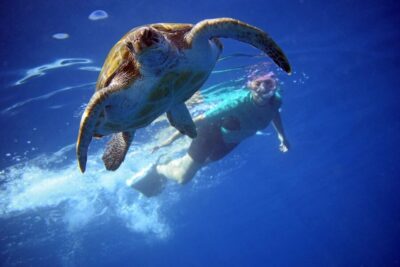 ★ 4.6Kayak and Snorkel with Turtles, Wetsuits IncludedFrom $357,215 reviews
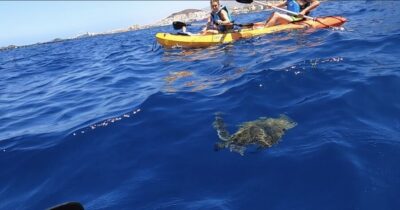 ★ 4.5Kayak Safari and Snorkel in a Marine ReserveFrom $293,214 reviews
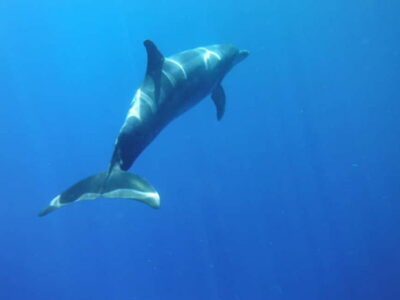 ★ 4.6Kayak & Snorkel with Local Fauna, Photos IncludedFrom $362,010 reviews
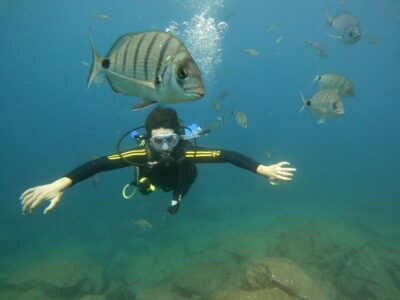 ★ 4.7Your First Scuba Diving Experience in Turtle AreaFrom $841,679 reviews
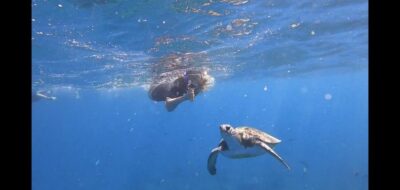 ★ 4.1Tenerife Snorkeling boat trip in a Turtle HabitatFrom $421,547 reviews
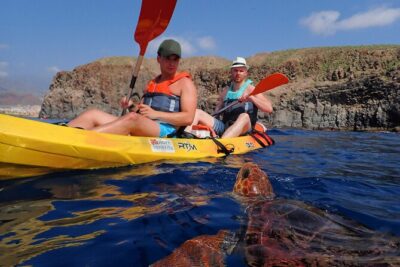 ★ 4.5Turtle & Dolphin Kayak Tour with Snorkel & WetsuitFrom $421,411 reviews
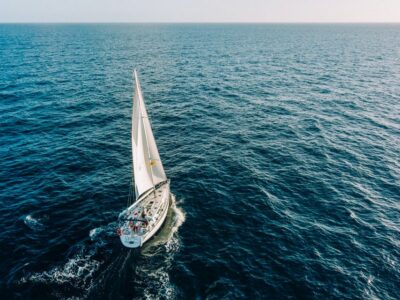 ★ 4.8Sailboat Tour Whale Watching Food and SnorkelingFrom $70652 reviews
 ★ 4.8Kayak Sea Safari with Snorkel and SnacksFrom $41639 reviews
Browse the lists this tour appears in