
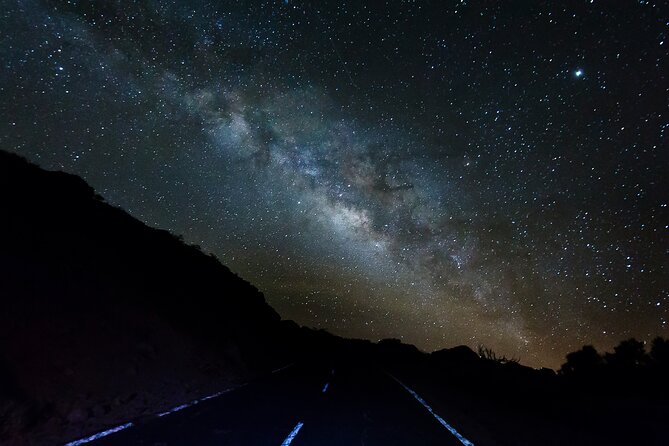
Reviewed · MOUNT TEIDE & CABLE CAR
Polestar SELF-DRIVE Sunset Stars Tour in Teide National Park
You get two sky shows in one night. This Teide experience pairs a west-facing sunset with guided stargazing using a computerized telescope. I especially love the way the team keeps the evening friendly and practical, even if you do not star-watch often. One possible drawback: the start area can feel busy with multiple tours using the same viewpoint, and it can turn freezing after sunset.
I like that the setup feels stress-free: you meet at Mirador de los Poleos, watch the sky change color, then the group heads deeper into Teide for the darker viewing spots. The team has a serious astronomy brain, and I’ve seen names like Steve and Daniele mentioned alongside guides such as Phil and Pete. Still, the tour is English only, so if English is shaky, you may want to plan for extra patience or skip this one.
Bring a warm layer you actually trust. Reviews keep repeating the same point: once the sun drops, Teide nights bite, even in Tenerife. If the forecast cooperates, though, the evening can turn into that rare trip moment you want to keep looking up for.
In This Review
- Quick Hits You’ll Care About
- Mirador de los Poleos: Your Sunset Anchor in Teide Country
- After Sunset: The Drive Into Teide and the Views That Change Fast
- Mount Samara Stargazing: Laser, Telescope, and Moon Over the Mountains
- Photography in Teide: How the Team Helps You Aim Smarter
- Price and Value: Why This Costs About $48
- Self-Drive Mechanics: Freedom, But Still With a Plan
- Weather and the Final Stargazing Spot
- Who Should Book This Sunset Stars Tour
- Should You Book? My Practical Take
- FAQ
- How long is the Polestar Self-Drive Sunset Stars Tour?
- Where do I meet, and where does the tour end?
- Is the tour offered in English?
- What is included with the ticket?
- Is dinner included?
- What happens if the weather is poor?
Quick Hits You’ll Care About
- Cava at sunset at Mirador de los Poleos, before the night turns serious
- Computerized telescope + laser guide so you can find targets faster
- Guides who explain clearly, including targets beyond the Moon (planets and more)
- Teide viewpoints with real eruption context, from early accounts to the 1909 eruption
- Small-ish group size with a maximum of 45 people
- Weather decides the final stargazing spot, so you are not stuck with a bad plan
Other ways up the volcano, side by side
- Tenerife: Mount Teide Tour with Cable Car Ticket & Transfer★ 4.3 · 5,094 reviews
- Tenerife: Teide National Park Sunset & Stargazing Tour★ 4.2 · 3,812 reviews
- Tenerife: Sunset and Stargazing at Teide National Park★ 4.7 · 2,826 reviews
- Teide National Park Sunset & Stargazing with Dinner (Star Safari)★ 5.0 · 2,601 reviews
Mirador de los Poleos: Your Sunset Anchor in Teide Country
Your evening begins at Mirador de los Poleos (Santiago del Teide). This is a west-facing viewpoint, so it is built for watching the sun dip and the sky shift right in front of you. From here, the views can reach across to La Gomera and La Palma, giving you that layered “islands in the distance” feeling.
The guide-style narration includes an old-school travel fact that makes the place feel more than just a pretty stop. The meeting point sits near a volcanic story that connects to what Christopher Columbus wrote in 1492 in his ship log during his voyage toward the Americas. It is the kind of detail you remember because it gives a reason the spot matters, not just a reason it looks good.
And yes, you will toast the moment. You get a glass of cava (or a non-alcoholic drink if you prefer). As the sun drops below the horizon, the team points out how Mount Teide can take on a redder tone, especially when the light hits just right. In other words, you get the classic “golden hour magic,” plus enough guidance that you know what to watch for.
After Sunset: The Drive Into Teide and the Views That Change Fast
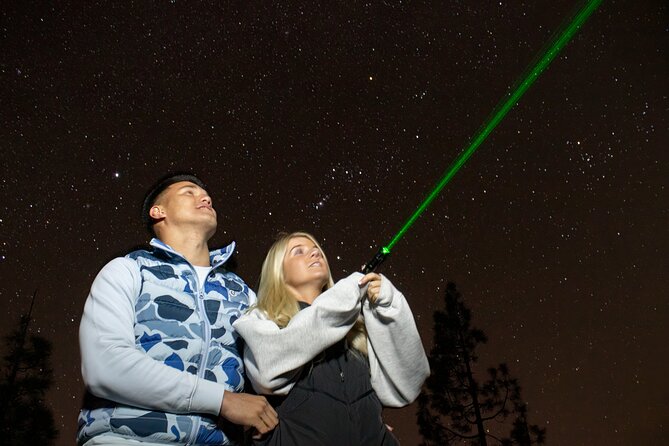
Once the sun is down, the pace changes from “sit and watch” to “follow along through the darkening park.” You will head up into Teide National Park, looking toward viewpoints tied to the region’s volcanic record. The evening includes a reference to the last recorded eruption in 1909, before continuing on to a stargazing lookout.
The next key stop is a lookout connected to Mount Samara. This is where the evening can really start to feel cinematic. As darkness deepens, you may see vivid cloud colors, and on clear nights the island of El Hierro can appear in the distance.
Timing matters here. One review notes that the transfer after the first viewpoint is short, around 5 minutes by drive, which keeps the momentum without wasting your night. That is a big deal, because stargazing time is precious. Dark sky is not something you can easily replace later once your body gets cold and your patience runs out.
Mount Samara Stargazing: Laser, Telescope, and Moon Over the Mountains
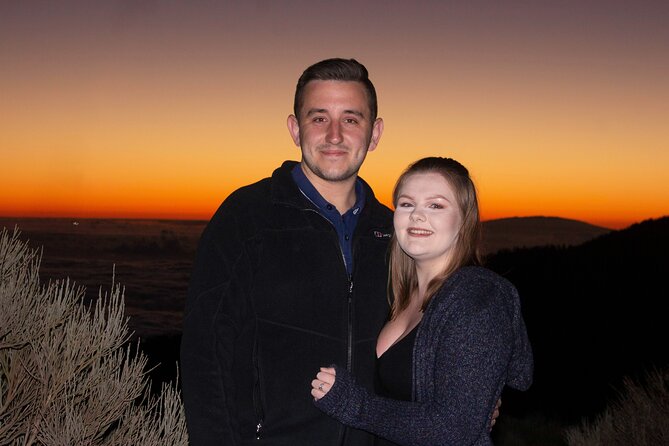
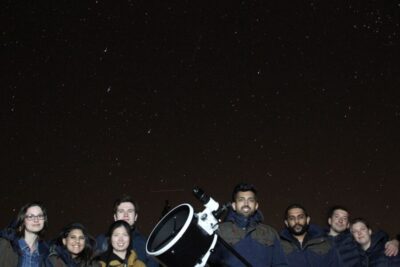
The main event is set once you arrive at the stargazing area. The tour uses a large computerized telescope plus a laser guide to stars. That combo is practical: the laser helps you understand what you are looking at, and the telescope lets you see it with actual detail instead of guessing from the naked eye.
What you see depends on timing and sky conditions, but you can expect more than just a quick Moon peek. The telescope work is described as covering the Moon and also other targets like planets, plus deep-sky objects such as galaxies, nebulae, and clusters. If your idea of stargazing is just seeing a few bright points, this is where the whole experience upgrades.
You might also get a beautiful twist: a bright Moon can either help or hinder your view. One review describes having a full moon, which reduced the number of stars you could see clearly, but made the Moon rise over the mountains feel unforgettable. So even if the sky is not perfect for Milky Way hunting, you can still have an incredible night.
The guides also work hard on explanation. Names like Steve come up in reviews as the kind of guide who chats with energy and adjusts the level for non-experts. You are not expected to know star names before you arrive. You will get pointers for what to look for and how to make sense of it while you are standing outside in real darkness.
Photography in Teide: How the Team Helps You Aim Smarter
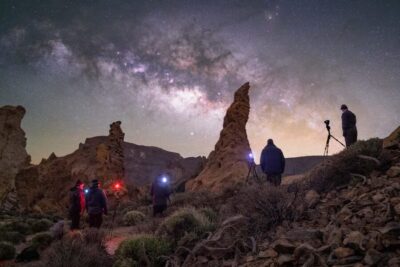
If you care about photos, this tour has a built-in advantage: the guides offer advice on the best photography opportunities in the park. That means you are not wandering around trying to guess which viewpoint is best tonight. Instead, you are following a plan tied to what the sky is doing right then.
Here’s what you should expect to photograph during a sunset-to-stars flow:
- Sunset color and the moment Teide shifts tones after the sun drops
- Cloud-lit scenes as darkness falls and sky hues deepen
- The Moon (often visible through a telescope even when the naked-eye stars are less dramatic)
- Larger star patterns like the Milky Way, if conditions allow
For your own camera setup, you’ll likely want to keep expectations realistic. In dark-sky situations, your best results usually come from steady support, a lens you can focus with, and a willingness to test settings. The tour’s value is that you can focus your energy on capturing targets the guide is pointing out, rather than burning time on trial and error.
Also: take warm gloves seriously. In cold air, fingers go numb fast, and you start missing shots while you struggle to adjust settings. Bring something that lets you work.
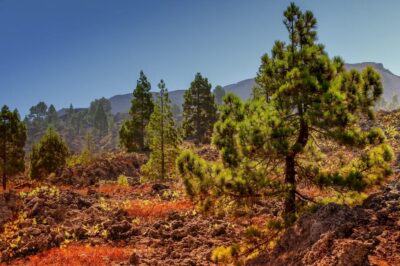
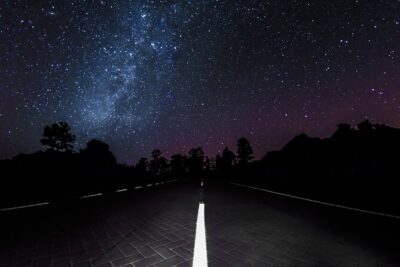
More nights out under the Teide sky
Price and Value: Why This Costs About $48
At $48.01 per person for roughly 2 hours 30 minutes, this is not a cheap impulse buy. But it also is not a “pay for nothing but a viewpoint” kind of deal. The price makes more sense when you look at what you actually get.
You are paying for:
- Access to the telescope setup
- A guided explanation of what you are seeing (including deep-sky targets)
- Cava (or a non-alcoholic drink)
- A night plan that takes you from sunset into darker viewing areas
What you are not paying for is dinner. There is no food served, so you’ll want to eat earlier. If you are planning a full night out, factor that in.
To me, the best value is for people who do not have their own astronomy gear. If you show up with binoculars and zero plan, you will still enjoy the night. But you will likely get more out of it when someone helps you target the sky and explains what you’re seeing through a telescope. That is exactly the kind of “time saved” value that matters with stargazing.
Self-Drive Mechanics: Freedom, But Still With a Plan
This is a self-drive style experience. That means you are not sitting on a bus all night. You meet at the first viewpoint, then you follow the route and timing through the evening so you do not spend your night guessing where to go.
Why that matters in Teide National Park: distances between viewpoints can look short on a map, but night driving takes longer than you think. The “self-drive but organized” structure gives you more independence than a full group bus tour, while still keeping you from showing up at the wrong place at the wrong time.
One review criticizes the self-drive format as feeling like you are on the outside while following the company van. That is a fair warning if you want constant, close-up guiding and no waiting between locations. The flip side is that reviews also describe the experience as layback and fun, with experts who are still very present once you arrive at the key stops.
Either way, here is what you can do to make this work for you: be on time at Mirador de los Poleos, and be ready to move when the guide says it is time. This trip lives on timing and weather.
Weather and the Final Stargazing Spot
This tour depends on conditions. It is described as requiring good weather. If weather is poor, you will be offered a different date or a full refund.
The final stargazing location can also vary based on weather. You end at Mirador de Samara (Guía de Isora), but the exact stargazing point is decided on site. That flexibility is a plus if you want better sky rather than just sticking to a fixed map pin.
So pack for uncertainty. Even if Tenerife’s daytime weather looks great, nighttime temperatures at altitude can surprise you. Bring a hat, a heavy layer, and something windproof if you have it.
Who Should Book This Sunset Stars Tour
This is a strong fit if:
- You want sunset + stars in one outing
- You want expert guidance without needing astronomy gear
- You enjoy photography and want help aiming at the right moments
- You’re comfortable in English-only instruction
The tour is also described as suitable for most travelers, and service animals are allowed. If you are traveling with kids, one review highlights that it can work well for children aged 12 and over, as long as they understand English or you can translate along.
It may be less ideal if:
- You hate cold weather and do not plan to dress for it
- You want a private, only-your-group experience (the group size can be up to 45)
- English-only tours are a deal-breaker
Should You Book? My Practical Take
Book it if you want a guided night that actually teaches you what you are seeing. The combination of cava at the sunset viewpoint, then a telescope-focused stargazing session, gives you both the emotional payoff and the “wait, that’s a nebula” surprise factor.
I would not book it if you are looking for a warm, casual hang where you just show up, wander, and stay in the car. This is outdoors time with real cold, and the experience works best when you actively participate—listening, looking, and following the group to the next dark spot.
If the forecast looks decent and you dress for the temperature, this is the kind of Teide evening that turns into a real memory. The sky does the hard work. The guides just help you see it clearly.
FAQ
How long is the Polestar Self-Drive Sunset Stars Tour?
It’s listed as approximately 2 hours 30 minutes.
Where do I meet, and where does the tour end?
You meet at Mirador de los Poleos (Santiago del Teide) and the tour ends at Mirador de Samara (Guía de Isora). The exact stargazing point can vary depending on weather.
Is the tour offered in English?
Yes, it is English only.
What is included with the ticket?
The ticket includes the telescope and a drink: a glass of cava or a non-alcoholic drink.
Is dinner included?
No. There is no dinner or food served.
What happens if the weather is poor?
The experience requires good weather. If it’s canceled due to poor weather, you’ll be offered a different date or a full refund.
More Tour Reviews in Tenerife
- Siam Park Entry Tickets
★ 4.5 · 15,710 reviews - Tenerife: Eco-Yacht Whale and Dolphin Watching and Swimming
★ 4.7 · 15,619 reviews - Los Cristianos Respectful No-Chase Whale and Dolphin Safari
★ 4.6 · 12,782 reviews - Tenerife: Loro Parque Entry Ticket
★ 4.8 · 12,411 reviews - Loro Parque and Siam Park Combined Admission Tickets
★ 4.7 · 7,307 reviews
More Stargazing on the Mountain
- Tenerife: Teide National Park Sunset & Stargazing Tour
★ 4.2 · 3,812 reviews - Tenerife: Sunset and Stargazing at Teide National Park
★ 4.7 · 2,826 reviews - Teide National Park Sunset & Stargazing with Dinner (Star Safari)
★ 5.0 · 2,601 reviews - Teide National Park: Sunset & Stargazing Safari with Dinner
★ 4.6 · 2,115 reviews - Teide by Night: Sunset & Stargazing with Telescopes Experience
★ 4.5 · 1,492 reviews
Teide, a Few More Ways Up
- Tenerife: Mount Teide Tour with Cable Car Ticket & Transfer
★ 4.3 · 5,094 reviews - Tenerife: Teide National Park Sunset & Stargazing Tour
★ 4.2 · 3,812 reviews - Tenerife: Sunset and Stargazing at Teide National Park
★ 4.7 · 2,826 reviews - Teide National Park Sunset & Stargazing with Dinner (Star Safari)
★ 5.0 · 2,601 reviews - Teide National Park: Sunset & Stargazing Safari with Dinner
★ 4.6 · 2,115 reviews
Just Added: Fresh Tenerife Reviews
Mount Teide & Cable Car, compared.
 ★ 4.3Mount Teide Tour with Cable Car Ticket & TransferFrom $1025,094 reviews
 ★ 4.2Teide National Park Sunset & Stargazing TourFrom $473,812 reviews
 ★ 4.7Sunset and Stargazing at Teide National ParkFrom $472,826 reviews
 ★ 5.0Teide National Park Sunset & Stargazing with Dinner (Star Safari)From $952,601 reviews
 ★ 4.6Teide National Park: Sunset & Stargazing Safari with DinnerFrom $652,115 reviews
 ★ 4.5Mount Teide, Masca, Icod and Garachico Day TripFrom $652,065 reviews
 ★ 4.5Teide National Park Full-Day Tour with PickupFrom $661,613 reviews
 ★ 4.7Quad Adventure Tour in Teide National ParkFrom $941,492 reviews
Browse the lists this tour appears in