
Reviewed · SANTA CRUZ & LA LAGUNA TOURS
Escape game in Santa Cruz de Tenerife
A city walk becomes a brain workout. I like the English-friendly way the story and instructions are handled, and I also like that you can lean on helpful hints when the puzzles get tricky. One possible drawback: if you’re bringing kids, expect an escape-room vibe that may not feel fully age-adapted, based on a negative experience with a 10-year-old birthday group.
You’ll start at Plaza de España in Santa Cruz de Tenerife at 6:00 pm for about 90 minutes, using a mobile ticket. The group size is capped (up to 50), which keeps it manageable, and you’ll get a confirmation within 48 hours when you book.
One fun twist: you’ll do tests around town, including a first challenge in the market area, but the exact finish location is treated as part of the surprise.
In This Review
- Key highlights before you book
- Escape the City style: an outdoor escape game, not a scripted tour
- Getting started at Plaza de España: where the story begins
- The market-area test: puzzles where you can actually look
- Hints, monitors, and why names keep coming up
- The surprise ending: why they don’t tell you where it ends
- How long is 90 minutes, really?
- Price and value: what $24 buys you in Santa Cruz
- English mode and how the story feels in real life
- Who should book this escape game?
- Practical tips to make it smooth (and actually fun)
- Should you book this escape game in Santa Cruz de Tenerife?
- FAQ
- Where is the meeting point for the escape game?
- What time does the game start?
- How long does the experience last?
- Is the escape game offered in English?
- How much does it cost?
- Do I need a printed ticket?
- Can service animals join the experience?
- Is there a physical fitness requirement?
- Can I cancel for a refund?
Key highlights before you book
- Plaza de España kickoff at 6:00 pm, with a real meeting spot and a clear start moment
- Market-area puzzle test, done on foot in the city setting, not in a room
- A surprise ending that’s intentionally not spelled out in advance
- Monitors named Iris, Erika, Yanira, and Desirée showing up in feedback, with clear, friendly help
- Hints are allowed, so you can keep the tension without stalling for an hour
- Moderate physical fitness works best since it’s an outdoor, walk-between-stops format
More of the capital and old La Laguna
- Santa Cruz de Tenerife Palmetum Entry Ticket★ 4.7 · 246 reviews
- From Santa Cruz: Teide Volcano, Icod, & Garachico Tour★ 4.9 · 234 reviews
- Santa Cruz de Tenerife: Beginner’s Diving & Introduction★ 5.0 · 136 reviews
- Santa Cruz de Tenerife: 2-Hour Hiking Tour in Anaga Forest★ 4.8 · 133 reviews
Escape the City style: an outdoor escape game, not a scripted tour
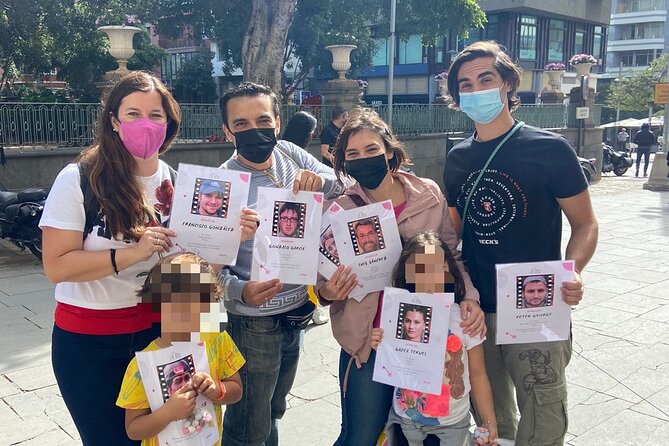
This is the kind of activity that turns your usual evening stroll into something you actually have to think about. You’re not just walking from point A to point B. You’re doing tests that push you to read the environment like it’s a clue board—so the city becomes part of the puzzle.
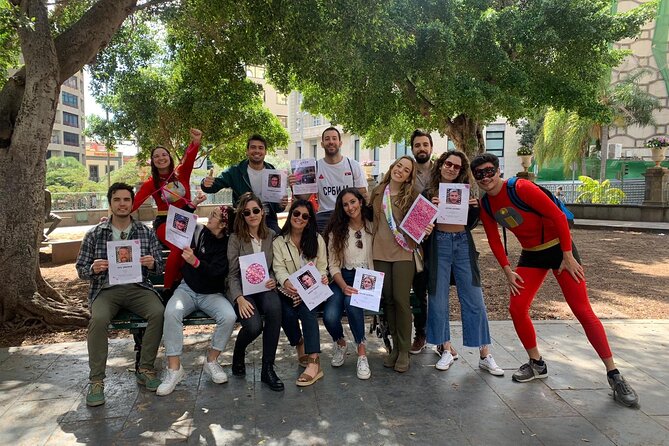
I also like that the format seems built for interaction. Multiple monitors are mentioned by name—Iris, Erika, Yanira, and Desirée—and the pattern in the feedback is consistent: they explain clearly, keep things moving, and help when you need it. That matters, because an escape game lives or dies on pacing and support.
The outdoor setting is part of the value. It’s a different way to see Santa Cruz (and the surrounding “lagoon”/La Laguna-style area referenced in feedback), and you’re doing it without the cost or time of a bigger, guided tour.
Getting started at Plaza de España: where the story begins
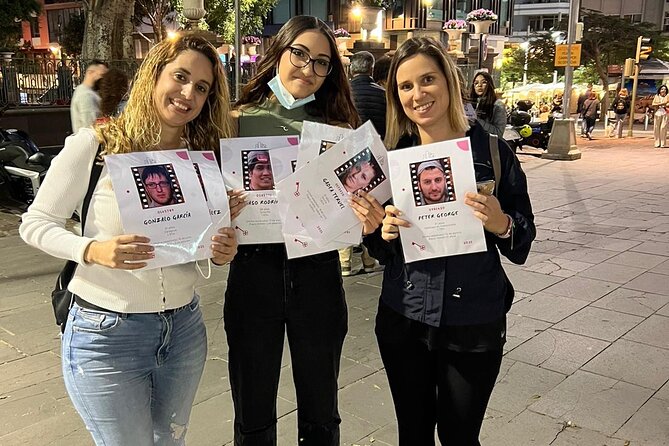
Your meeting point is Plaza de España, S/N, 38001 Santa Cruz de Tenerife. The start time is 6:00 pm, so you’re catching the city in the evening—often a sweet spot for an outdoor game because it’s usually less punishing than midday.
What I think makes this start work is that it’s immediate. You don’t waste the first 20 minutes shuffling around. At the beginning, you get the setup and then you’re off to try your first test. One of the tour beats is literally described as the market test, which tells you the game’s structure isn’t abstract or purely informational. It’s action first.
Also, the route has enough structure to keep you from feeling lost, but enough freedom to feel like you’re exploring. That’s the sweet spot for me: you get purpose, without getting herded.
If you’re booking for a group, it’s worth showing up a few minutes early so you can settle in and start on time. Escape-style games often feel best when you don’t rush the briefing.
The market-area test: puzzles where you can actually look
One of the stops includes a test in the market area. This is a smart design choice. Markets are naturally “puzzle-shaped”: you’re surrounded by objects, signage, and patterns that lend themselves to riddles, logic tasks, and observation challenges.
From feedback, the puzzle difficulty seems tuned to create tension—like you might not get it—while still being solvable with guidance. That’s exactly what you want. If a game is too easy, it stops being fun. If it’s too hard, people start to drift into frustration. In this case, support is available, and the monitors’ energy is repeatedly called out.
One practical tip for you: if you’re the type who wants to control everything, don’t. This kind of game is collaborative. Assign roles fast—one person reads details, another tracks clues, another keeps an eye out for where to try the next step. It keeps momentum and prevents the classic slow-down where everyone waits for the “smart” person.
Hints, monitors, and why names keep coming up
In escape games, the host can make the difference between a “meh” experience and a memorable one. Here, monitors are repeatedly praised, with several names showing up in the feedback: Iris (mentioned with strong story and comfort), Erika (friendly and enthusiastic), Yanira (especially good with kids in one birthday account), and Desirée (put effort into clear explanations).
The best part is not just friendliness. It’s that the guidance feels useful. One review explicitly notes that you can ask for clues, and other notes describe instructors helping you get unstuck so the game stays fun rather than grinding.
So if you hit a wall, treat it like part of the game, not a failure. Use hints strategically:
- Ask early enough that you don’t waste the session
- When you get a clue, try to apply it immediately rather than going off on a tangent
- If you’re with mixed abilities, don’t let one person’s struggle stall everyone
And if you’re thinking about language: the activity is offered in English, and multiple notes describe clear explanation. That’s helpful because puzzle games can be frustrating if instructions are vague.




The surprise ending: why they don’t tell you where it ends
The ending location is intentionally not revealed. That’s not just marketing. Keeping the finish as a surprise changes your mindset. You stop thinking like a tourist and start thinking like a player.
Practically, this also reduces guesswork for you while you’re in the moment. Instead of spending mental energy figuring out your next location on your own, you focus on the clues and the tests. The game is designed to shepherd you toward the final step without needing you to map every turn.
There is one trade-off: you can’t pre-plan where the last stop will be, which can affect how you coordinate dinner plans right after. If you’re the type who likes to have a specific restaurant reservation timed to the minute, pick something flexible. Or at least build in a buffer so you aren’t sprinting across town at the end.
Still, for most people, a surprise finale is a plus. It gives closure in a way a typical scavenger walk doesn’t.
How long is 90 minutes, really?
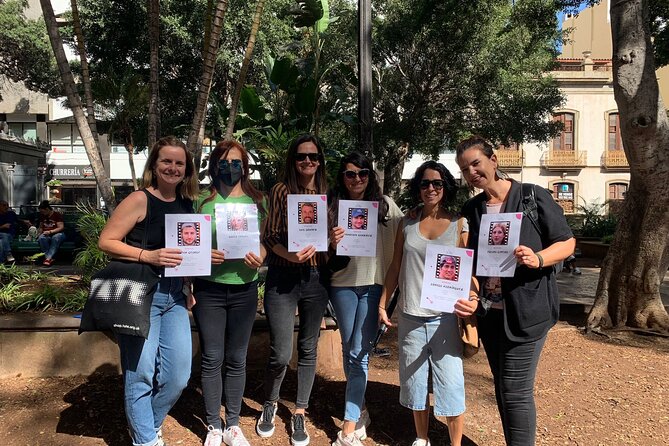
The duration is about 1 hour 30 minutes. In practice, that’s enough time to do multiple puzzle beats, walk between them, and still feel like you’re finishing rather than abandoning the last challenge when your legs start to complain.
Because it’s an outdoor route, you’ll spend some minutes just moving, checking clues, and regrouping. That means the actual “thinking time” is shorter than the full 90 minutes. So if you want to get the best value from your ticket, come ready to participate.
Also keep in mind the condition note: you should have moderate physical fitness. That doesn’t mean you need to be an athlete, but it does mean you should be comfortable walking around while concentrating—less “sit down and read,” more “move and solve.”
Price and value: what $24 buys you in Santa Cruz
At $24 per person, this sits in that sweet category of paid activities that feel worthwhile without breaking your vacation budget. You’re paying for:
- structured entertainment
- a host/monitor who keeps things fair
- puzzle design that prompts you to pay attention
- an outdoor route that changes how you experience the streets
Is it a bargain? It depends on your travel style. If you love puzzles and want something interactive, this price feels reasonable for an evening plan. If you’re not into game mechanics and you prefer passive sightseeing, it might feel like you’re paying for walking plus a few tasks.
For me, the value hinges on the monitor quality and the pacing. The feedback pattern strongly suggests that the experience is guided and supported—not left to chance. If that’s what you’re looking for, $24 can be a good deal.
One more value clue: it’s commonly booked ahead. On average, it’s booked about 18 days in advance, so if you’re traveling during peak periods or want a specific day, don’t wait until the last moment.
English mode and how the story feels in real life
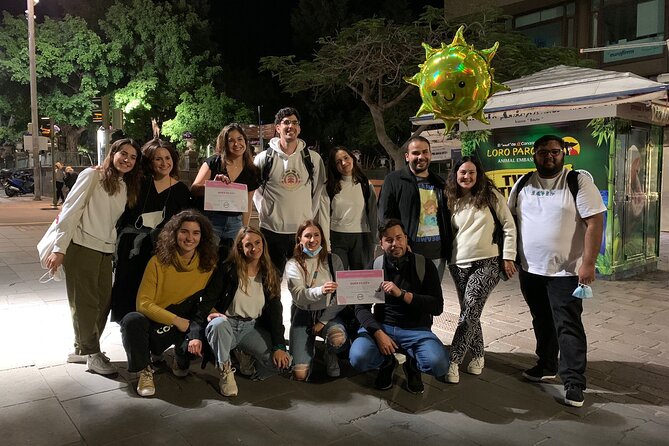
The game is offered in English, and that’s a big plus if you want to enjoy the puzzle logic without guesswork. Escape-style experiences can become frustrating if the story beats and instructions are delivered too quickly or too informally. Here, feedback points toward clear explanation, which helps English-speaking players follow what to do next.
Now, the balanced part: one negative experience said the story and tests didn’t feel adapted to children and that stops seemed disconnected, with kids getting bored. That doesn’t mean your experience will match that. It does mean you should go in with eyes open about what this is: a light city-game format with puzzles tied to locations, not a museum-grade narrative.
For adults and for mixed groups, that typically works well. For families, especially with younger kids, it may be hit or miss depending on attention span and puzzle interest.
Who should book this escape game?
This is a strong match for:
- Couples looking for an activity that adds teamwork
- Friends who like puzzles and want something different from a standard evening
- Visitors who want to see parts of town through a playful lens rather than a traditional checklist
- People who appreciate friendly hosts and the option to ask for clues
It may be less ideal if:
- You’re bringing kids who are not into puzzles or don’t like structured challenges
- Your group expects a tightly connected, high-drama storyline from stop to stop
- You hate walking and prefer strictly indoor activities
On the other hand, positive feedback includes a birthday group experience with a 10-year-old, where the monitor was described as kind and good with the boys. So if you’re bringing kids, you don’t need to rule it out—but pick the day with patience, and be ready to use hints to keep energy up.
Practical tips to make it smooth (and actually fun)
A few small prep ideas can make a big difference:
- Wear comfortable shoes. You’ll be moving between stops, outdoors, for 90 minutes.
- Bring your phone battery seriously. Even though you use a mobile ticket, having charge helps for maps and coordination if you need it.
- Assign one person as the clue-reader and another as the “try it now” person. It speeds up decisions.
- If the game allows hints (and it does, per feedback), use them to correct your route or reset the group’s focus. Don’t treat hints as last resort.
If you’re going as a group, agree on how you’ll ask for help. That prevents awkward delays where everyone argues about whether to request a clue.
And if you’re the kind of person who gets competitive: great. Just keep the tone friendly. Escape games go best when the group feels safe to ask questions.
Should you book this escape game in Santa Cruz de Tenerife?
If you want an evening plan that feels interactive and keeps you paying attention to the city, I’d recommend booking. The strongest reason is the combination of clear, English-capable guidance and monitors who help you keep moving—with named examples like Iris, Erika, Yanira, and Desirée showing up in feedback.
Go for it if you like puzzles, walking, and team problem-solving. It’s also a solid option when you want something more memorable than a standard sightseeing hour.
Skip it or think twice if your group needs everything tightly tailored to children or you dislike outdoor walking. One negative experience flagged that mismatch, and it’s smart to respect that possibility.
If you do book, arrive a little early at Plaza de España, lean on hints when needed, and treat the surprise ending like the fun part—not something you need to control. That mindset is half the win.
FAQ
Where is the meeting point for the escape game?
You meet at Plaza de España, S/N, 38001 Santa Cruz de Tenerife, Spain.
What time does the game start?
The start time is 6:00 pm.
How long does the experience last?
It takes about 1 hour 30 minutes.
Is the escape game offered in English?
Yes, the experience is offered in English.
How much does it cost?
The price is $24.00 per person.
Do I need a printed ticket?
You use a mobile ticket.
Can service animals join the experience?
Yes, service animals are allowed.
Is there a physical fitness requirement?
You should have a moderate physical fitness level.
Can I cancel for a refund?
You can cancel for a full refund up to 24 hours before the experience’s start time.
More Tour Reviews in Tenerife
- Siam Park Entry Tickets
★ 4.5 · 15,710 reviews - Tenerife: Eco-Yacht Whale and Dolphin Watching and Swimming
★ 4.7 · 15,619 reviews - Los Cristianos Respectful No-Chase Whale and Dolphin Safari
★ 4.6 · 12,782 reviews - Tenerife: Loro Parque Entry Ticket
★ 4.8 · 12,411 reviews - Loro Parque and Siam Park Combined Admission Tickets
★ 4.7 · 7,307 reviews
More of Santa Cruz & La Laguna
- Santa Cruz de Tenerife Palmetum Entry Ticket
★ 4.7 · 246 reviews - From Santa Cruz: Teide Volcano, Icod, & Garachico Tour
★ 4.9 · 234 reviews - Santa Cruz de Tenerife: Beginner’s Diving & Introduction
★ 5.0 · 136 reviews - Santa Cruz de Tenerife: 2-Hour Hiking Tour in Anaga Forest
★ 4.8 · 133 reviews - Tenerife: Santa Cruz, La Laguna and Anaga Tour
★ 3.5 · 67 reviews
Just Added: Fresh Tenerife Reviews





Santa Cruz & La Laguna Tours, compared.
 ★ 4.7Santa Cruz de Tenerife Palmetum Entry TicketFrom $7246 reviews
 ★ 4.9From Santa Cruz: Teide Volcano, Icod, & Garachico TourFrom $85234 reviews
 ★ 5.0Santa Cruz de Tenerife: Beginner’s Diving & IntroductionFrom $89136 reviews
 ★ 4.8Santa Cruz de Tenerife: 2-Hour Hiking Tour in Anaga ForestFrom $50133 reviews
 ★ 3.8Santa Cruz Guided Bike Tour 1.5 hourFrom $2467 reviews
 ★ 3.5Santa Cruz, La Laguna and Anaga TourFrom $6167 reviews
 ★ 3.9Santa Cruz guided bike tour 1,5 hour + TapasFrom $4261 reviews
 ★ 5.0Santa Cruz de Tenerife: Vilaflor Canyoning TourFrom $7749 reviews
Browse the lists this tour appears in