
Reviewed · SANTA CRUZ & LA LAGUNA TOURS
1.5 Hour Guided Bike Tour of Santa Cruz de Tenerife
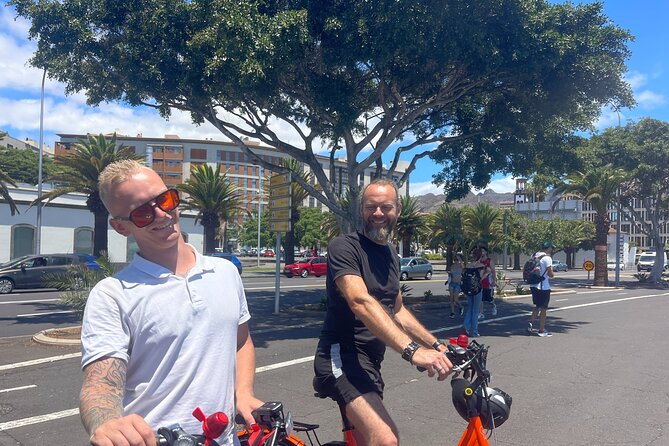
You can see a lot of Santa Cruz fast. This 1.5-hour guided bike tour is built around the city’s most recognizable sights, from old squares to modern landmarks. I especially liked the easy flow on bikes and the smart stop choices that keep things moving without feeling rushed. One thing to consider: it’s more of a guided ride with quick exterior stops than a slow, deep sightseeing tour.
The tour uses regular or electric bikes (your option depends on what you choose), plus a local guide and bottled water to keep the momentum. You’ll roll through central neighborhoods where the plazas, churches, and architecture all sit close enough to make a bike tour actually make sense.
With a small group (often 10–15), you should get personal attention—but based on past experiences, guide language and the amount of historical talk can vary. If you want lots of detailed explanations at each stop, go in with realistic expectations.
In This Review
- Key Highlights You’ll Feel in Real Life
- Bikes, Timing, and the Small-Group Feel
- Price and What $32.65 Really Buys in Santa Cruz
- Stop-by-Stop: What You’ll Actually See in 1.5 Hours
- Plaza de la Candelaria: The meeting point with real symbolism
- Plaza de España: Modern architecture over older ground
- Iglesia de la Concepción: Canarian colonial details you can spot fast
- Teatro Guimera: A neoclassical theater from 1851
- Templo Masónico de la Logia de Añaza: A Masonic façade with mystery
- Parish of St. Francisco de Asís: Baroque peace in a short stop
- Auditorio de Tenerife: Calatrava’s wave-like landmark
- Castillo de San Juan Bautista (Castillo Negro): The Black Castle and Nelson’s link
- The Carnival poster mosaic: Color during the ride
- Cabildo Insular de Tenerife: Island politics, right in the center
- Back to Plaza de la Candelaria: Wrap-up and easy last photos
- The Guide Matters: Language, Detail, and How to Get More Value
- Who This Santa Cruz Bike Tour Fits Best
- Should You Book This Tour?
- FAQ
- FAQ
- How long is the Santa Cruz de Tenerife guided bike tour?
- Where does the tour start in Santa Cruz?
- Are bikes regular or electric?
- Is food included?
- Can children ride, and are helmets provided?
- What’s the cancellation policy?
Key Highlights You’ll Feel in Real Life
- 1.5 hours, not half a day: You get a concentrated city hit without burning your schedule.
- Photo-friendly stops every few minutes: The route is structured for quick views and clear photo angles.
- Big-name landmarks in a compact loop: Plaza de España, Teatro Guimera, Auditorio de Tenerife, and Castillo de San Juan Bautista.
- Small-group pacing: Between 10 and 15 people is the sweet spot for staying together and comfortable.
- Bike setup that reduces friction: Helmets and child seats are available on request, and luggage storage is included.
- A “Carnival poster mosaic” moment: You’ll catch a colorful clue to Tenerife’s most famous annual party as you ride by.
More rides through the Orotava valley and beyond
- Tenerife: Quad Bike Tour to Mount Teide at Sunset★ 4.4 · 368 reviews
- Tenerife: Teide Volcano Sunset Quad Bike Tour with Drinks★ 4.3 · 290 reviews
- Tenerife: Guided Quad Bike Tour to Teide National Park★ 4.7 · 263 reviews
- From Costa Adeje: Mount Teide Forest Off-Road Quad Bike Tour★ 4.8 · 228 reviews
Bikes, Timing, and the Small-Group Feel
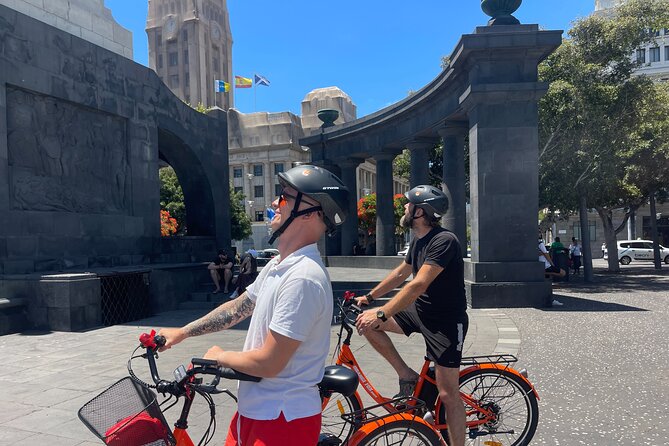
This tour is designed to be simple: meet up in central Santa Cruz, bike for about 90 minutes, and end back at the starting point. The listed route includes multiple short stops (about five minutes each), which is exactly how you should picture it. You’re not getting a long sit-down at each place. You’re getting a guided look, quick context, and then back on the bike.
Logistics are handled in ways that matter on the ground. You’ll have luggage storage, which is a relief if you’re traveling with backpacks and want to avoid carrying everything. You also get bottled water, and helmets are available (and child seats on request). That turns the ride into something calmer and more practical, especially if you’re not from a place where people bike everywhere.
Group size is a major factor in how good this type of tour feels. This one runs as a small group (listed between 10 and 15), which usually means fewer pauses and less chaos when you stop for photos or questions. There’s also a maximum limit noted for the activity overall, so the operator isn’t counting on a huge crowd to “make it work.”
One caution: the experience is dependent on the guide you get. A bike tour lives or dies on explanations. If you’re hoping for lots of historical storytelling, do your planning with flexibility—this is a quick route, and your guide’s style will shape how much you learn.
Price and What $32.65 Really Buys in Santa Cruz
At $32.65 per person, you’re paying for four core things:
- A local guide who keeps you oriented while you ride
- A regular or electric bike (depending on the option you select)
- Structured stops at major sights without needing to figure logistics yourself
- Extras that make it easier to travel light (like luggage storage and water)
For me, the value comes from the time efficiency. Santa Cruz’s key sights—especially the big plaza areas and major landmarks—can be scattered enough that walking plus taxis adds up. With bikes, you cover ground quickly and still get a “tour” shape to the day.
That said, the tour’s lower scoring in the past points to an important truth: value isn’t only about the price tag. It’s also about whether the tour matches your expectations. If you want detailed interior access or long stops at museums, you might feel the pace is too quick. If you’re good with short photo-and-context stops, the price can feel fair for what you get.
Stop-by-Stop: What You’ll Actually See in 1.5 Hours
Here’s the route in plain terms, with what each stop adds (and what to watch for). Most stops are listed as free to view, so you’re paying for guiding and the ride, not entry tickets.
Plaza de la Candelaria: The meeting point with real symbolism
You start at Plaza de la Candelaria, one of Santa Cruz’s oldest and most central squares. The focus is the marble monument to the Virgin of Candelaria, patron saint of the Canary Islands. This stop is a good warm-up because it’s easy to orient yourself: you’re in the heart of the action, and you’ll see the surrounding historic streets and shops.
If you’re the type who likes learning why a place matters, this one gives you immediate context—religion, identity, and local tradition in one spot.
More of the capital and old La Laguna
Plaza de España: Modern architecture over older ground
Next is Plaza de España, described as the largest square in the Canary Islands. It’s built over the ruins of a historic fortress, and it includes a lagoon-style fountain. The design is connected to Swiss architects Herzog & de Meuron, which you’ll likely notice in the clean, contemporary layout.
This stop works well for photos because the fountain area and open space are built for wide shots. It also gives you a neat contrast: Santa Cruz isn’t only old stone—it’s layered, with old history under newer planning.
Iglesia de la Concepción: Canarian colonial details you can spot fast
At Iglesia de la Concepción, you’re looking at a 16th-century church that’s noted as the oldest in Santa Cruz. You’ll also see the distinctive bell tower and wooden balconies—traditional island craftsmanship with a strong religious thread.
The quick timing here means you’ll mostly get exterior impressions. Still, if you pay attention, you can spot the architectural cues without needing a long tour.
Teatro Guimera: A neoclassical theater from 1851
Then you roll by Teatro Guimera, built in 1851. It’s the oldest theater in the Canary Islands and named after Catalan writer Àngel Guimerà. This is one of those stops where the façade is the show, even if you’re only viewing from outside.
If you love cities where performance culture is part of everyday streetscapes, you’ll appreciate this one. It’s also a nice break from churches and squares.
Templo Masónico de la Logia de Añaza: A Masonic façade with mystery
Next is the Templo Masónico de la Logia de Añaza. The catch: it’s noted as not open to the public, so you’re viewing from the outside. Still, the route includes it because the façade is full of symbolic detail and architectural intrigue—enough to make the stop feel more than a roadside glance.
If you’re the type who enjoys architectural puzzles and symbolism, you’ll likely enjoy this brief moment. If you expected to go inside, plan to be satisfied with the exterior look.
Parish of St. Francisco de Asís: Baroque peace in a short stop
You then see the Parish of St. Francisco de Asís, a Baroque-style church built on the former Franciscan convent site. The tour notes the interior as serene, with beautiful altarpieces, but given the quick format, you may only catch a limited view depending on access during your visit.
Even as a short stop, the church setting gives your eyes a different pace—less open street, more spiritual stillness.
Auditorio de Tenerife: Calatrava’s wave-like landmark
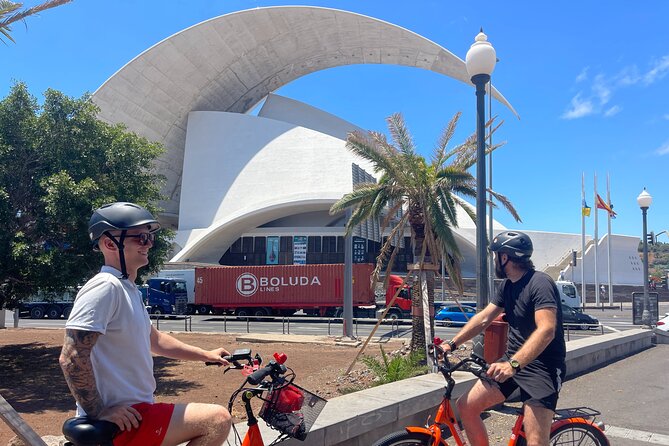
One of the biggest reasons to do this tour is the Tenerife Auditorium (Auditorio de Tenerife). It’s a modern Tenerife symbol designed by Santiago Calatrava, with a form that resembles a wave or ship’s sail. It’s also a major venue for concerts and opera, and it’s one of the island’s most photographed buildings.
This stop is worth it even if you’re not a “modern architecture person.” The structure is readable from multiple angles, and it’s easy to frame from the street. If your timing lines up, you might find light hitting it in a flattering way—perfect for quick photos.
Castillo de San Juan Bautista (Castillo Negro): The Black Castle and Nelson’s link
Then comes Castillo de San Juan Bautista, nicknamed Castillo Negro. Built in the 17th century to defend the coast, it played a role in repelling Admiral Nelson’s attack in 1797. The tour describes it as one of the best-preserved fortresses in Santa Cruz.
This is a good stop when you want a reality check: this city has a defense story, not just a postcard story. It also helps break up the “city center” feel with something more defensive and monumental.
The Carnival poster mosaic: Color during the ride
As you cycle past, you’ll notice a colorful mosaic made from past Tenerife Carnival posters. This is the kind of detail that makes a guided street ride better than a GPS route. It’s fun, it’s local, and it gives you a Tenerife identity moment without needing a museum stop.
Cabildo Insular de Tenerife: Island politics, right in the center
Next is Cabildo Insular de Tenerife, the seat of the Island Council. The design is stately, and the building’s central role in island politics gives the architecture a purpose. Near it is a monument honoring those fallen during the Spanish Civil War (as described on the route).
If you like understanding how a city actually functions, this stop helps. You’re not just looking at scenery—you’re seeing the infrastructure of governance.
Back to Plaza de la Candelaria: Wrap-up and easy last photos
The tour ends by returning to Plaza de la Candelaria. This gives you a natural finish: time to ask the guide questions, take a few last photos, and head off when you’re ready.
The Guide Matters: Language, Detail, and How to Get More Value
This is where I’d be honest. Some past experiences have praised the guide and the bikes, while others complained about limited information or language mismatch.
So here’s how you can protect your expectations:
- If you strongly prefer guided explanations in a specific language, double-check your booking details before you arrive. The tour lists English, but not every group has had a smooth match in the past.
- If you want history, ask questions when you stop. With short five-minute moments, you’ll get more from your curiosity than from passive listening.
- If you’re mainly there for the ride and the big sights, you’ll probably feel good about the pace.
When it works, you’ll leave with a sense of the city’s key landmarks and how they connect—old squares, modern design, theater culture, and the fortification story.
Who This Santa Cruz Bike Tour Fits Best
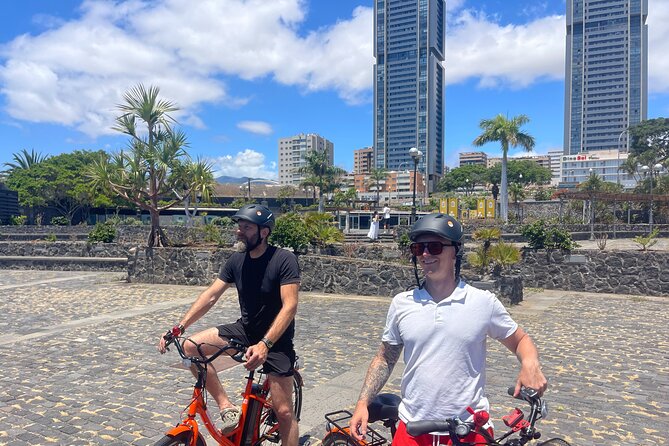
I think this tour fits best if you:
- Have limited time in Santa Cruz and want a smart overview
- Like seeing multiple major sights in a single outing
- Prefer active sightseeing over sitting on buses or walking all day
- Enjoy photos at iconic architecture spots like Auditorio de Tenerife and Plaza de España
It might be less satisfying if you want:
- Long time inside buildings or museums
- Very in-depth history at every stop
- A slow, lecture-style pace
If you’re traveling with kids, the inclusion of child seats and helmets on request is a big plus, and kids under 6 can ride free on a child seat (within the listed size/weight guidelines).
Should You Book This Tour?
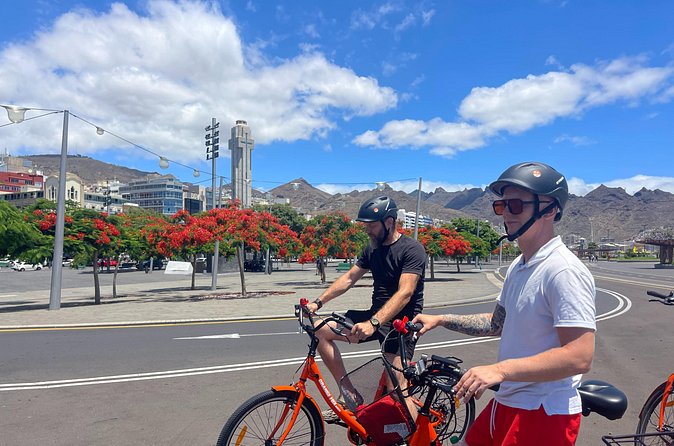
I’d book it if you want a practical, city-centered bike loop that hits Santa Cruz’s headline sights without complexity. The time efficiency is the biggest selling point, and the included water, luggage storage, and bike options make it easier than many “DIY” attempts.
I would pause before booking if you know you need heavy historical narration or you’re picky about the guide language matching your needs exactly. In that case, do your homework ahead of time and bring questions you’d like answered on the route.
FAQ
FAQ
How long is the Santa Cruz de Tenerife guided bike tour?
It’s listed at about 1 hour 30 minutes.
Where does the tour start in Santa Cruz?
The meeting point is Calle Dr. Allart, 17, 38003 Santa Cruz de Tenerife, Spain. The tour ends back at the meeting point.
Are bikes regular or electric?
The tour includes a regular or electric bike, depending on the option you select.
Is food included?
No. Meals are not included.
Can children ride, and are helmets provided?
Yes. Child seats and helmets are available on request. Children under 6 can ride free on a child seat (as long as they meet the listed size and weight limits).
What’s the cancellation policy?
You can cancel for a full refund if you cancel at least 24 hours in advance. Changes within 24 hours aren’t accepted, and cancellations less than 24 hours before the start time aren’t refunded.
More Tour Reviews in Tenerife
- Siam Park Entry Tickets
★ 4.5 · 15,710 reviews - Tenerife: Eco-Yacht Whale and Dolphin Watching and Swimming
★ 4.7 · 15,619 reviews - Los Cristianos Respectful No-Chase Whale and Dolphin Safari
★ 4.6 · 12,782 reviews - Tenerife: Loro Parque Entry Ticket
★ 4.8 · 12,411 reviews - Loro Parque and Siam Park Combined Admission Tickets
★ 4.7 · 7,307 reviews
More of Santa Cruz & La Laguna
- Santa Cruz de Tenerife Palmetum Entry Ticket
★ 4.7 · 246 reviews - From Santa Cruz: Teide Volcano, Icod, & Garachico Tour
★ 4.9 · 234 reviews - Santa Cruz de Tenerife: Beginner’s Diving & Introduction
★ 5.0 · 136 reviews - Santa Cruz de Tenerife: 2-Hour Hiking Tour in Anaga Forest
★ 4.8 · 133 reviews - Tenerife: Santa Cruz, La Laguna and Anaga Tour
★ 3.5 · 67 reviews
More Rides on Two Wheels
- Tenerife: Quad Bike Tour to Mount Teide at Sunset
★ 4.4 · 368 reviews - Tenerife: Teide Volcano Sunset Quad Bike Tour with Drinks
★ 4.3 · 290 reviews - Tenerife: Guided Quad Bike Tour to Teide National Park
★ 4.7 · 263 reviews - From Costa Adeje: Mount Teide Forest Off-Road Quad Bike Tour
★ 4.8 · 228 reviews - Tenerife: Guided Historical Bike Tour with E-Bike Option
★ 3.9 · 83 reviews
Just Added: Fresh Tenerife Reviews



Santa Cruz & La Laguna Tours, compared.
 ★ 4.7Santa Cruz de Tenerife Palmetum Entry TicketFrom $7246 reviews
 ★ 4.9From Santa Cruz: Teide Volcano, Icod, & Garachico TourFrom $85234 reviews
 ★ 5.0Santa Cruz de Tenerife: Beginner’s Diving & IntroductionFrom $89136 reviews
 ★ 4.8Santa Cruz de Tenerife: 2-Hour Hiking Tour in Anaga ForestFrom $50133 reviews
 ★ 3.5Santa Cruz, La Laguna and Anaga TourFrom $6167 reviews
 ★ 3.8Santa Cruz Guided Bike Tour 1.5 hourFrom $2467 reviews
 ★ 3.9Santa Cruz guided bike tour 1,5 hour + TapasFrom $4261 reviews
 ★ 5.0Santa Cruz de Tenerife: Vilaflor Canyoning TourFrom $7749 reviews
Browse the lists this tour appears in