Reviewed · SURF & PADDLEBOARD LESSONS
Tenerife : clases de surf para principiantes y intermedios
Surfing starts with the first safe step.
This Tenerife session is a real, action-focused way to learn (or tighten up) your technique on one of the island’s most surf-friendly stretches. I love the lesson format that mixes a short theory warm-up with fast hands-on practice, and I like the strong coaching style where the instructor stays close in the water. One thing to weigh: it’s an extreme sport, so you’ll need a moderate fitness level and you should only join if you match the course’s safety limits.
The best part for me is the balance: you’ll learn how to get in safely, then you’re out there working on wave-catching and corrections while conditions let you. The small group size (up to 6) also makes it feel personal rather than rushed, which matters when you’re brand new.
A possible drawback is timing: sessions are listed as 2 hours, but on some days they may extend if conditions work and everyone agrees. Plan your day with some flexibility, and don’t expect a rigid schedule down to the minute.
In This Review
- Key reasons this surf lesson works
- Playa de Las Americas: why this beach makes surf lessons easier
- The 2-hour rhythm: theory first, then paddle time
- Safety coaching that actually matters when you’re new
- Equipment included: fewer things to buy, less stress at the beach
- Group size and the social mix: learn faster with less waiting
- Intermediate-friendly without leaving beginners behind
- Who should book, and who should skip this surf lesson
- Price and value: is $38 a good deal for 2 hours?
- Photos, fruit, and how to capture your memories
- Tips to get more from your surf lesson
- Should you book this Tenerife surf course?
- FAQ
- Where is the meeting point for the surf lesson?
- How long is the surf lesson?
- Is this surf lesson for beginners?
- What is the maximum group size?
- What equipment is included?
- What should I bring besides the included gear?
- Is a towel included?
- Is sunscreen included?
- Can non-swimmers join?
- What health or age limits apply?
Key reasons this surf lesson works
- Small group coaching (max 6) means you get more than one-shot feedback
- 30 minutes of theory helps you understand what to do before you paddle out
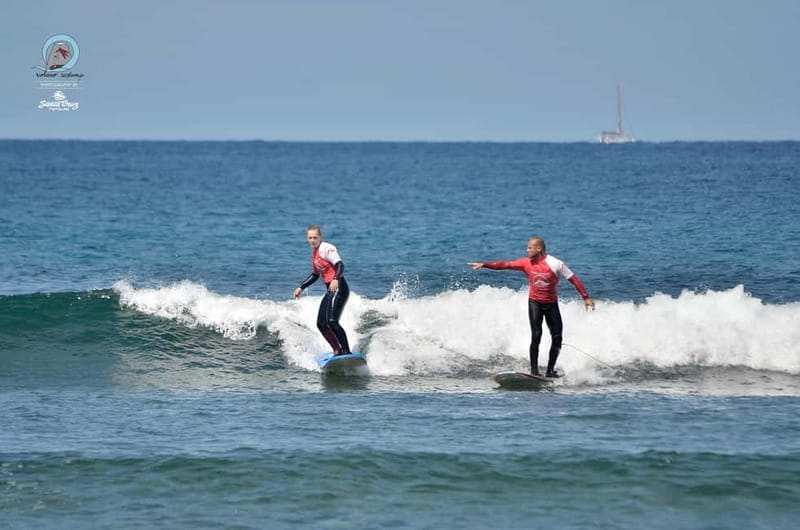
- Instructor close by in the water for safety and wave-catching support
- Beginners and intermediates together so you don’t feel left behind
- Included gear (wetsuit, board, boots) removes the biggest hassle
Other lessons along Playa de las Americas
- Tenerife: Surfing Lesson for All Levels, Photos included★ 4.9 · 1,314 reviews
- Group Surfing Lesson at Playa de las Américas, Tenerife★ 5.0 · 1,072 reviews
- Playa de las Américas: Private or Small-Group Surf Lesson★ 4.8 · 980 reviews
- Group Surf Lessons★ 5.0 · 310 reviews
Playa de Las Americas: why this beach makes surf lessons easier
Playa de Las Americas is the kind of place where surf lessons make sense. You’re in the south of Tenerife, and the school runs sessions right here at the most famous surfer beach on the island. That’s a big practical advantage: you’re not hoping for the perfect plan on a random shoreline—you’re training at a well-established spot.
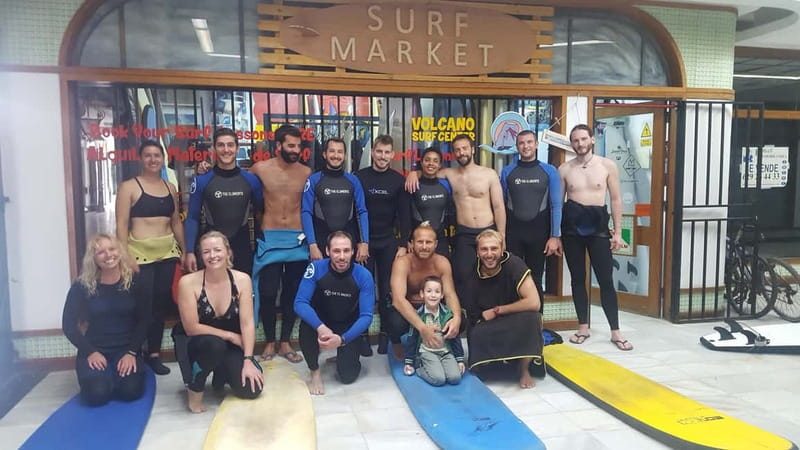
You’ll meet at Surf Market Volcano surf school, next to a bar, at Parque Santiago 2. From there, the whole flow is built around getting you suited up and into the water quickly. If your vacation style is active but not complicated, this setup is pretty friendly.
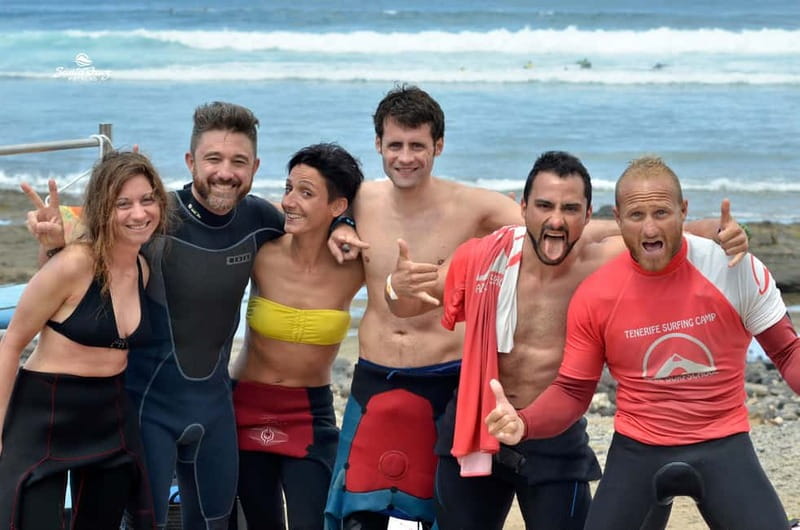
And yes, expect an international vibe. The course is designed to bring people together, so you’ll meet surfers from different countries and swap tips between sessions. Reviews also highlight how the instructor creates a comfortable mood where first-timers can relax and focus.
The 2-hour rhythm: theory first, then paddle time
This is scheduled as a 2-hour surf lesson, and it’s structured so you don’t waste your energy.
Here’s the flow you can expect:
- 30 minutes of theory before you get in the water
- You put on wetsuit and shoes/boots, then head out with the group
- The instructor teaches how to enter the water safely
- You practice what you learned while the guide stays close for corrections
- When the session ends, you go back to the school, store equipment, and change
- Then you briefly talk through what you felt and how it went
That theory segment is more than a warm-up lecture. When you’re learning to surf, small mistakes happen fast—wrong timing, unsafe positioning, or not understanding what to do when you wipe out. The short prep gives you a mental checklist so your first attempts aren’t just random.
In the water, you’re not left alone to figure it out. The instructor supports you with corrections and help catching waves when you’re ready. For beginners, that “close coaching” is the difference between fear and progress.
One more realistic note: wave conditions can change. One review points out that if the waves start slow, the guide may ask if everyone agrees to extend the time. That means you might get extra practice on a good day, but you should keep your schedule flexible.
Safety coaching that actually matters when you’re new
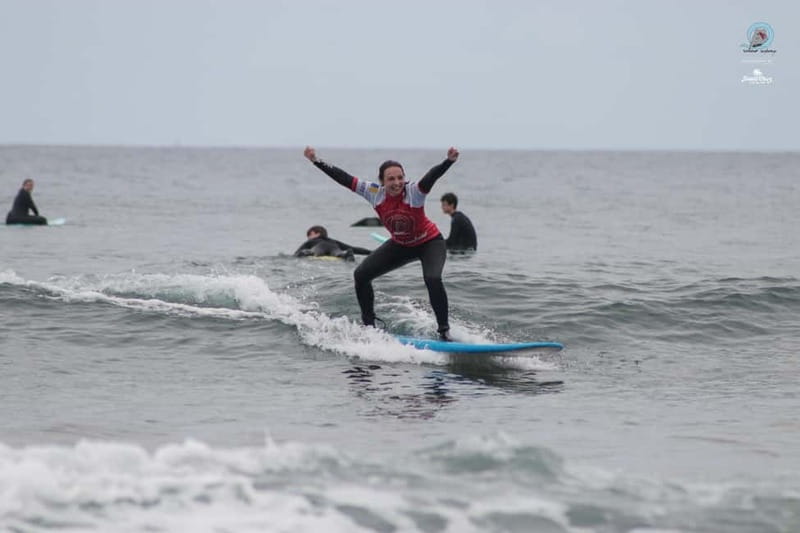
Surfing has a learning curve, and the school makes safety part of the lesson—not an afterthought. They teach how to go into the water safely, and the instructor stays near you so you can get help if something feels off.
This matters for two reasons:
- Beginners need guidance on where to paddle and how to handle the first wave interactions.
- Intermediates often benefit from small corrections—positioning, timing, and board control—before they try bigger efforts.
The instructor team is Spanish, Italian, English, and French friendly, so you can usually get your questions answered in your comfort language. Reviews also call out instructors by name, especially Israel, praised for teaching quickly and keeping a positive atmosphere. If you’re traveling solo, that kind of coaching tone helps you blend in fast.
There are also clear rules about what’s not allowed: no alcohol or drugs, no glass objects, and no explosive substances. They also discourage making noise or making fire. It’s a reminder that you’re sharing a natural sport space, so treat it with respect and you’ll have a smoother session.
Equipment included: fewer things to buy, less stress at the beach
Value-wise, this course is built to remove friction. The included package covers:
- Wetsuit
- Surfboard
- Boots (listed as boots/shoes)
- Titled instructor
- Civil/medical insurance
- Water and fresh fruit after the lesson
Not needing to rent your own board and suit is a genuine win. On vacation, gear logistics can turn a fun activity into a chore. Here, you show up and get geared up.
What you still need to bring:
- towel (not included)
- sunscreen (not included)
- swimwear and beachwear
- flip-flops
- cash and/or credit card (cash is listed too)
- passport
- sunglasses might be wise, though they’re not explicitly listed
- they list wetsuit in the packing info as well, even though the equipment is included—so double-check what’s provided for your specific booking to avoid duplicates
I’d also bring a simple attitude: you’re going to get wet, and you’ll probably feel like your arms got a full workout. That’s normal. Bring the basics and let the school handle the surf-specific kit.
Group size and the social mix: learn faster with less waiting
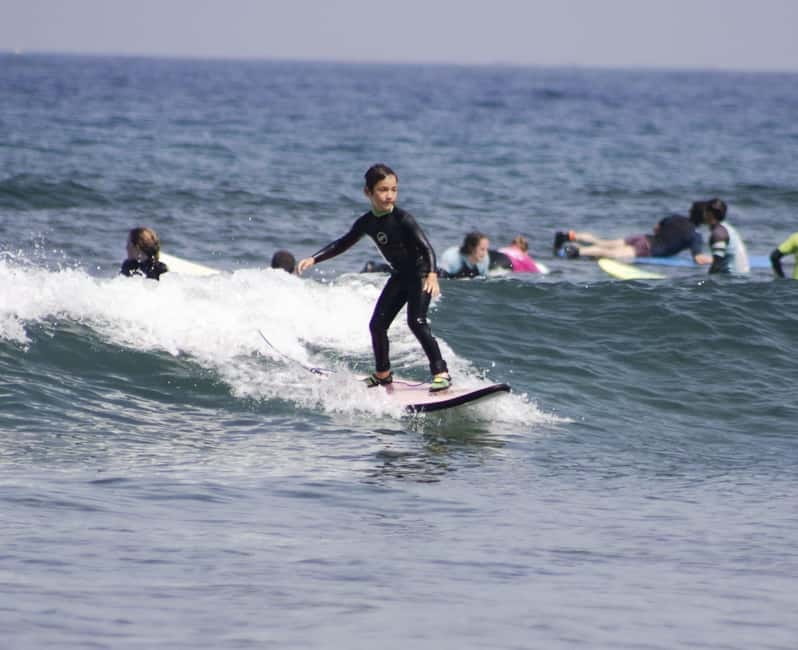
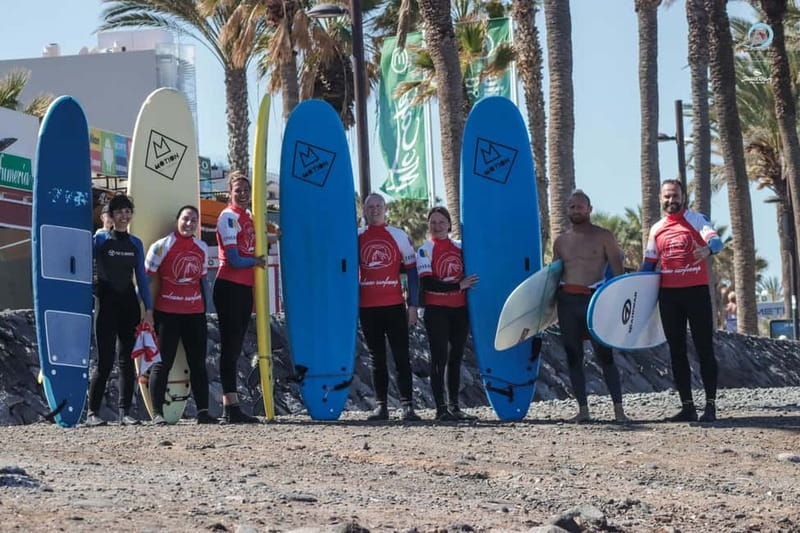
The lesson is a small group, limited to 6 participants. Reviews back up how that changes the experience: when the group is tiny, coaching feels much more direct. One review described a group of just three students, with super careful support—exactly the kind of situation where you can learn quickly because you spend more time actually trying, not waiting.
You’ll also meet people from all over the world, and the course is set up for mixed skill levels. That’s good if you’re traveling with friends who are different abilities, or if you want to make conversation between attempts. Surf lessons can be awkward for beginners—nervous people often feel better when they’re not the only beginner.
Language support helps too. Having Spanish, Italian, English, and French available means you won’t be stuck guessing during the most important moments.
Intermediate-friendly without leaving beginners behind
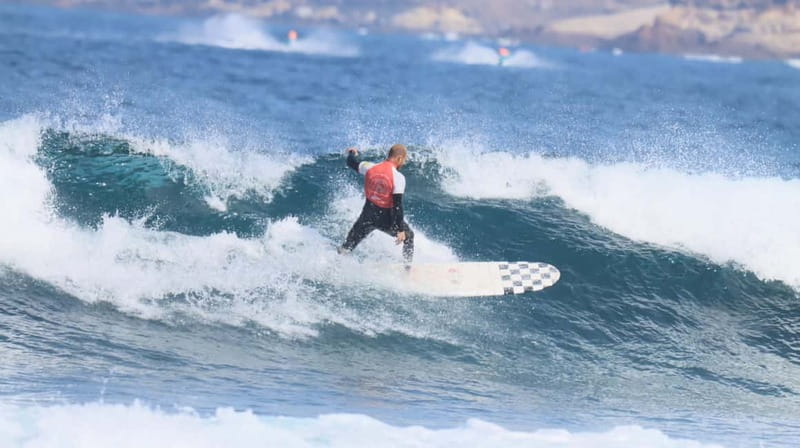
One nice detail in the way this course is marketed: it’s for beginners and intermediates. That doesn’t just mean you’ll be grouped by age. It also suggests the instructor expects a range of abilities and will guide everyone to waves they can handle.
For true beginners, focus on the process. The win is standing up at least once and learning what happens when you lose balance. For intermediates, you can work on safer positioning and smoother transitions. The instructor’s corrections help both groups, but in different ways.
The best reviews emphasize atmosphere and support rather than strictness. One mentions the instructor is not super strict with the end timing. In real surf training, that flexibility can be a plus when waves are cooperating. Don’t count on it every day, but it’s a sign the instructor listens to the group and conditions.
Who should book, and who should skip this surf lesson
This is not for everyone. The activity is described as an extreme sport requiring moderate fitness. You’ll want enough stamina to paddle, carry yourself in the water, and recover between tries.
It’s not suitable for:
- children under 10
- pregnant women
- people with back problems
- non-swimmers
- people with a cold
- people with haemophilia
- people over 55
If you’re unsure about whether you fit, treat this as a safety-first activity, not a casual “try it once” outing. If you’re a non-swimmer, don’t “push through” for vacation bragging rights—pick a safer alternative.
Also, if you’re traveling with kids, make sure they meet the age limit first. One review praised how a teacher taught children quickly, but the official rule still sets the minimum at 10.
Price and value: is $38 a good deal for 2 hours?
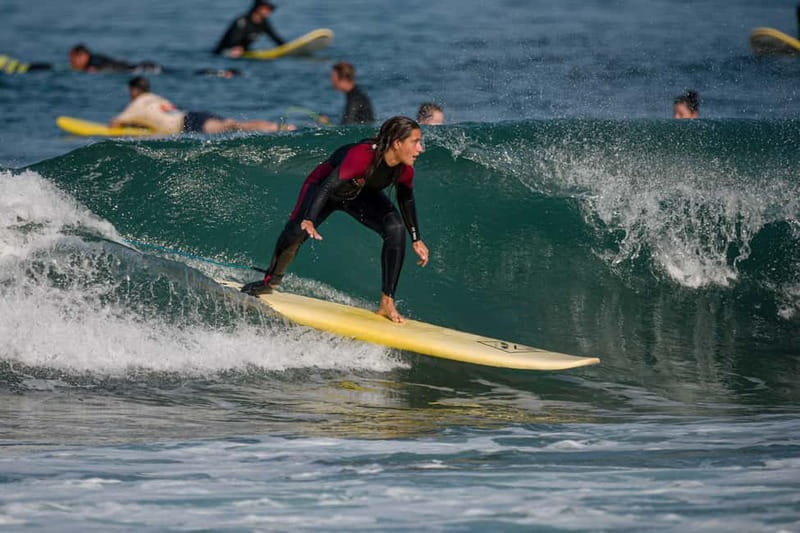
At $38 per person for a 2-hour lesson, this lands in the category of good-value surf experiences—especially because key costs are included.
What you get that normally costs extra elsewhere:
- instructor coaching
- full equipment (wetsuit, board, boots)
- water and fresh fruit
- civil/medical insurance
What costs you extra:
- towel and sunscreen
- transfer from and to your hotel/house (so you’ll need your own way to reach the meeting point)
When I think about value, I weigh the “setup savings” as much as the “time.” You don’t have to shop for gear or coordinate rentals, and the coaching is hands-on with corrections in the water. For first-timers, that reduces wasted attempts.
Also, small-group limits help the price feel fair. If you’ve ever done an activity where you barely see the instructor, you know why this matters.
Photos, fruit, and how to capture your memories
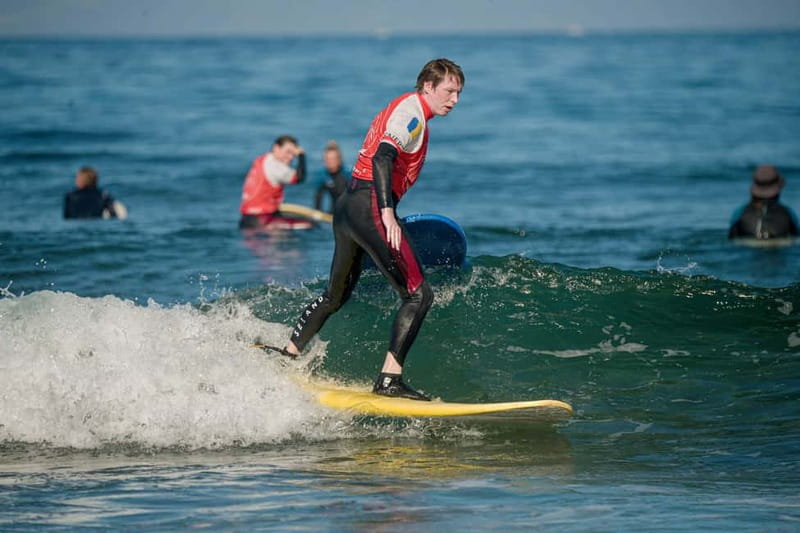
The school offers the option to buy personal pictures taken by a professional photographer. That’s a nice add-on if you want a few solid shots without trying to manage a camera at the beach.
But if you care a lot about action photos of your own ride, don’t assume photography will cover everything you want. One review notes that they wanted more time for practice and suggests bringing an action camera for memories. The lesson is short, so the best way to get the shots you want is to plan for them—within what’s allowed on the day.
After the session, you’ll return to the school to leave equipment and change. You’ll also get water and fresh fruit, which is a small thing but genuinely helps when you’re drying out and recalibrating after getting worked over by ocean energy.
Tips to get more from your surf lesson
You’ll enjoy the session more if you set yourself up for success before you ever paddle out.
- Bring a towel you’re comfortable with and put it where you can grab it quickly after.
- Apply sunscreen in advance if your skin burns easily. Sunscreen isn’t included.
- Wear flip-flops so you can move safely between changing areas and the beach.
- Keep your fitness moderate, not heroic: if you’re worn out before you start, you’ll struggle to learn.
- Listen during the theory—the first safe water steps usually prevent the biggest frustration.
- Plan for wet clothes afterward and give yourself enough time to change comfortably.
And one practical mindset shift: treat your first successful stand as a bonus, not the requirement. The lesson’s real goal is learning the steps that lead to standing, wave catching, and safer control.
Should you book this Tenerife surf course?
Book it if you want a structured beginner surf lesson with real coaching, in a small group, using equipment that’s already handled. It’s also a strong choice if you’re traveling with different skill levels—because the format is designed for beginners and intermediates together.
Skip it if you don’t meet the safety and fitness limits, or if you’re dealing with health factors like back problems, cold, or if you’re a non-swimmer. Surf is physical and the ocean is unpredictable; this isn’t the day to test your boundaries.
If you’re on the fence, lean toward booking when:
- you’re ready to paddle and try again after wipeouts,
- you want the instructor close for corrections,
- and you value equipment + guidance bundled into one clear 2-hour plan.
FAQ
Where is the meeting point for the surf lesson?
You meet at Surf Market Volcano surf school, next to a bar in Parque Santiago 2.
How long is the surf lesson?
The lesson is 2 hours.
Is this surf lesson for beginners?
Yes. It’s designed for both beginners and intermediate surfers.
What is the maximum group size?
The group is limited to 6 participants.
What equipment is included?
Full equipment is included: wetsuit, board, and boots.
What should I bring besides the included gear?
You should bring a passport, swimwear, a towel, sunscreen, flip-flops, beachwear, and cash or a credit card.
Is a towel included?
No, towel is not included.
Is sunscreen included?
No, sunscreen is not included.
Can non-swimmers join?
No. The activity is not suitable for non-swimmers.
What health or age limits apply?
Children under 10 are not suitable, and it’s also not suitable for pregnant women, people with back problems, people with a cold, people with haemophilia, and people over 55.
More Tour Reviews in Tenerife
- Siam Park Entry Tickets
★ 4.5 · 15,710 reviews - Tenerife: Eco-Yacht Whale and Dolphin Watching and Swimming
★ 4.7 · 15,619 reviews - Los Cristianos Respectful No-Chase Whale and Dolphin Safari
★ 4.6 · 12,782 reviews - Tenerife: Loro Parque Entry Ticket
★ 4.8 · 12,411 reviews - Loro Parque and Siam Park Combined Admission Tickets
★ 4.7 · 7,307 reviews
More Surf & Paddle Sessions
- Tenerife: Surfing Lesson for All Levels, Photos included
★ 4.9 · 1,314 reviews - Group Surfing Lesson at Playa de las Américas, Tenerife
★ 5.0 · 1,072 reviews - Playa de las Américas: Private or Small-Group Surf Lesson
★ 4.8 · 980 reviews - Group Surf Lessons
★ 5.0 · 310 reviews - Surf in Tenerife – Photos Included & Stand Up From Day One
★ 4.7 · 190 reviews
Just Added: Fresh Tenerife Reviews



Surf & Paddleboard Lessons, compared.
 ★ 4.9Surfing Lesson for All Levels, Photos includedFrom $501,314 reviews
 ★ 5.0Group Surfing Lesson at Playa de las Américas, TenerifeFrom $431,072 reviews
 ★ 4.8Playa de las Américas: Private or Small-Group Surf LessonFrom $41980 reviews
 ★ 5.0Group Surf LessonsFrom $66310 reviews
 ★ 4.7Surf in Tenerife – Photos Included & Stand Up From Day OneFrom $47190 reviews
 ★ 5.0Private Surfing Lesson at Playa de las AméricasFrom $133167 reviews
 ★ 5.0Group Surf Lesson at Playa de las AméricasFrom $53110 reviews
 ★ 4.4Los Cristianos : 1 Hour of Paddle surf RentalFrom $2191 reviews
Browse the lists this tour appears in