Reviewed · SURF & PADDLEBOARD LESSONS
Surfing lessons in Las Americas
Two hours can change your beach day fast when you’re learning to surf in Las Américas. I like the focus on time on the board (about 1.5 hours in the water), and I also like the fact that this runs with a tight group, capped at 10 people, so you’re not lost in a crowd.
One thing to consider: you need required swimming skills and moderate fitness, and the lesson length inside the water can shift based on your surfing level.
In This Review
- Key Highlights You’ll Actually Notice
- Surfing Lessons in Las Américas: The Big Picture
- Where You Meet and How You Get to the Water
- The 2-Hour Lesson Flow: Theory, Safety, Practice
- Part One: Short Theory That Sets You Up
- Part Two: Safety Rules and Spot Information
- Part Three: Practical Surf Time in the Water
- How Your Surf Skills Change the Lesson
- The Instructor Style That Makes You Want to Keep Trying
- Small Group Size: Why Max 10 People Is a Big Advantage
- Who This Surf Lesson Fits Best
- Price and Value: Is $48.06 Worth It?
- Weather and the Reality of Ocean Time
- Practical Tips Before You Go
- Should You Book This Surf Lesson?
- FAQ
- How long is the surfing lesson in Las Américas?
- How much time will I spend in the water?
- What language is the lesson offered in?
- Where do I meet for the lesson?
- What’s the group size limit?
- Do I need swimming experience or a certain fitness level?
- When will I receive confirmation after booking?
- Is free cancellation available?
Key Highlights You’ll Actually Notice
- About 1.5 hours practicing in the water, not just watching from shore
- Small class size (max 10), which helps you get clear coaching
- English instruction for straightforward directions and safety rules
- Safety rules + surf spot briefing before you head into the water
- Rocky Point surf experience runs the lesson from the Playa de las Américas area
Other lessons along Playa de las Americas
- Tenerife: Surfing Lesson for All Levels, Photos included★ 4.9 · 1,314 reviews
- Group Surfing Lesson at Playa de las Américas, Tenerife★ 5.0 · 1,072 reviews
- Playa de las Américas: Private or Small-Group Surf Lesson★ 4.8 · 980 reviews
- Group Surf Lessons★ 5.0 · 310 reviews
Surfing Lessons in Las Américas: The Big Picture
If you want a surf lesson that feels efficient, this one fits the bill. It’s set in Tenerife, Spain, right in Playa de las Américas, and the structure is simple: some important theory, a safety and surf-spot briefing, then hands-on practice in the water.
The total time is about 2 hours, and you usually spend around 1.5 hours actually practicing on the surfboard in the water. That ratio matters. Surf is a skill you build through repetition, not through speeches. So when a lesson is built around getting you into the action quickly, you’ll feel progress faster—whether you’re brand-new or still getting your balance.
This is also the kind of activity that works well as part of a broader Tenerife trip. It’s not a half-day commitment, and it ends back at the meeting point. You can still plan dinner, a beach stroll, or a relaxed evening after the waves calm down.
Where You Meet and How You Get to the Water
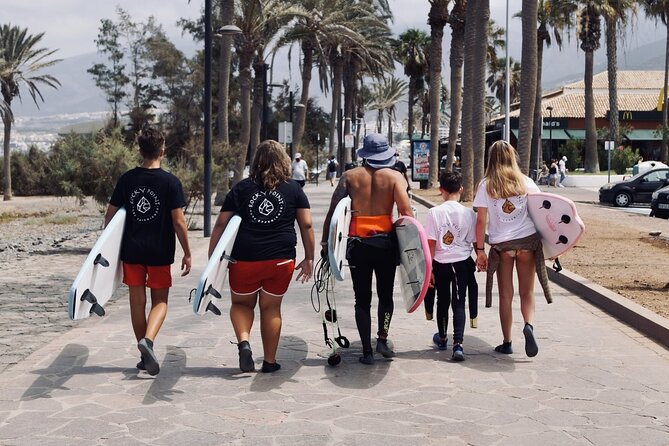
You start at Parque Santiago II, Av. Rafael Puig Lluvina, 32, 38650 Playa de la Américas, Santa Cruz de Tenerife, Spain. You’ll also finish right back at that same meeting point.
The location is convenient in real-world terms. It’s near public transportation, and there’s parking nearby at a reasonable cost, which makes the whole day feel less stressful—especially if you’re juggling a rental car or picking up multiple people.
From there, you’ll head toward the beach area with your instructor. The whole “meet first, then walk to the coast” flow keeps the lesson from feeling like an expedition. You also avoid that common beginner frustration where everyone stands around waiting while the briefing drags. Here, the clock is built around getting you into the water.
The 2-Hour Lesson Flow: Theory, Safety, Practice
This lesson is designed in parts, and each part has a purpose.
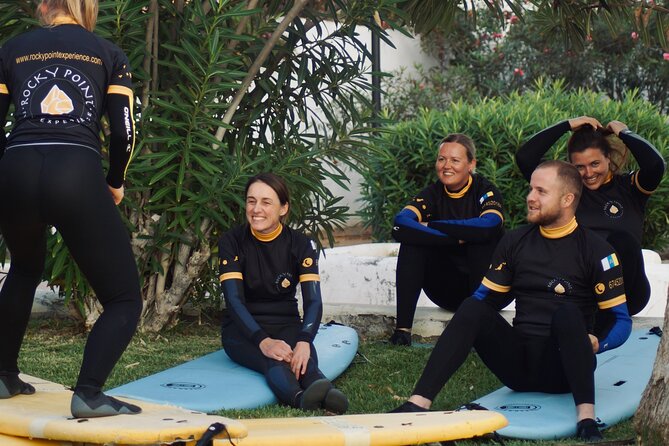
Part One: Short Theory That Sets You Up
You begin with some important theory, which is really about the essentials: how to handle basic movements, how to think about your body position, and what to listen for when the instructor gives in-water guidance.
The good news is that theory isn’t treated like a classroom lecture. It’s quick and practical, meant to turn into action immediately. In a sport like surfing, understanding what to do is half the battle, but only the part you can use right away counts.
A few more Tenerife trips to weigh up before you book


Part Two: Safety Rules and Spot Information
After the initial practice talk, your instructor explains security rules and key information about the specific surf spot you’ll be working at.
This part is valuable because every beach break has its own personality. Currents, wave behavior, and where beginners should stand can vary a lot. A good surf school doesn’t just teach you how to stand on a board—it helps you understand how to stay safe while you learn.
You’ll also get the kind of spot guidance that prevents chaos in the water. Even if you’re excited, you need a plan for where you’ll paddle, how you’ll manage timing with other surfers, and what to do if conditions shift.
Part Three: Practical Surf Time in the Water
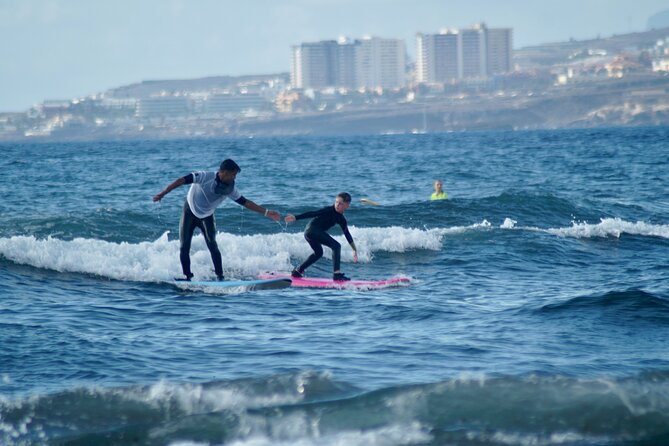
Then comes the main event: you put that knowledge to work with your instructor in the water. This is where the lesson earns its keep.
For most people, it’s roughly 1.5 hours of time actually on the board in the ocean. The exact distribution can shift depending on your surfing skills, but the overall emphasis stays the same: practice beats waiting.
How Your Surf Skills Change the Lesson
One of the most honest parts of this program is that timing depends on you. The information given says the schedule and what each part includes can vary depending on your surfing skills.
So if you’re completely new, you can expect more instruction and correction focused on basics—balance, paddling technique, and what to do when a wave shows up. If you already have some board time, you’ll likely spend more time applying what you already know and refining your approach.
That flexibility is a big deal for value. It means you’re less likely to feel stuck doing the same repetitive task with no progression. Instead, you get enough coaching to stay safe and improve, without the lesson becoming either too slow or too advanced.
The Instructor Style That Makes You Want to Keep Trying
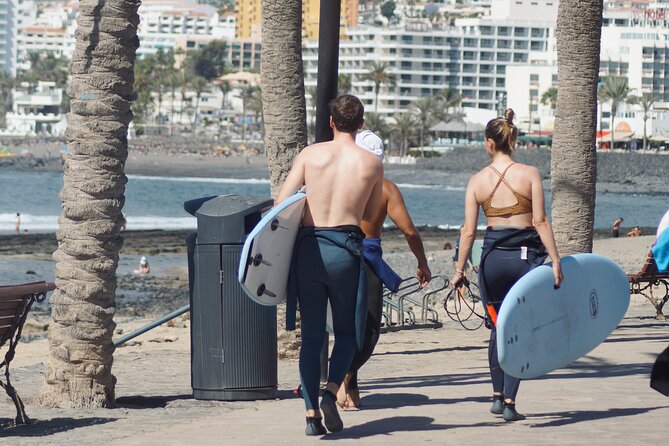
From the feedback, one of the strongest themes is the way instructors support both confidence and technique. People liked that the instructor was patient and supportive, especially for situations where a parent and child were learning together.
That matters more than it sounds. In surfing, fear can stop you faster than lack of skill. A calm coach helps you reset quickly after a wipeout. Supportive teaching also makes it easier to follow safety guidance without feeling rushed or embarrassed.
I also like that coaching is tied to the actual conditions you’re facing. You’re not just doing generic moves. You’re learning what to do in the water, then trying it immediately.
Small Group Size: Why Max 10 People Is a Big Advantage
This activity keeps the group small, with a maximum of 10 travelers.
In a lesson, group size affects everything: how many times you can ask questions, how quickly you get corrections, and how clearly the instructor can manage everyone’s safety in the water.
With a smaller group, you tend to get more attention. That doesn’t mean every second is personal coaching, but it does mean you’re not just another board in the lineup.
If you’re the type who learns better with feedback (most people do), a max-10 class is a practical sweet spot. Large groups often turn lessons into a watch-and-wait routine. This one aims to keep the energy moving.
Who This Surf Lesson Fits Best
This works well if you:
- Have required swimming skills (you’re comfortable in the water)
- Have moderate physical fitness (paddling and getting up on a board takes effort)
- Want an experience with real practice time (about 1.5 hours in the water)
It’s also a good choice if you’re booking while juggling a busy Tenerife schedule. The lesson is short enough to fit between other plans, and the meeting point/return makes it easier to plan the rest of your day.
If you’re hoping for a long, multi-session surf progression, this isn’t that. It’s a focused lesson. The goal is to get you onto the board, learning and improving during a short, structured window.
Price and Value: Is $48.06 Worth It?
At $48.06 per person, this lesson isn’t trying to be a luxury package. It’s priced like a practical surf introduction in a popular Tenerife surf area.
Here’s how I’d judge the value:
- You’re getting 2 hours total, with about 1.5 hours on the board
- Instruction happens in English, which matters for understanding safety rules
- Group size is capped at 10, which improves coaching access
- The instructor covers both technique and spot-specific safety rules
If your main goal is to get actual wave time with an instructor—without spending half a day—then the structure looks like good value.
Also, it’s booked ahead of time on average (around 17 days). That’s often a sign the slot is in demand during the season. If your dates are fixed, booking early can help you lock in the lesson without scrambling.
Weather and the Reality of Ocean Time
This experience requires good weather. If it gets canceled due to poor weather, you’ll be offered a different date or a full refund.
That’s not a downside if you treat it like ocean conditions, not a promise-from-a-calendar. In surf, conditions can change fast, and a responsible surf school plans around that. If the ocean isn’t cooperating, you want them to pause rather than push into unsafe or flat-out miserable conditions.
Practical Tips Before You Go
A few things will make your lesson smoother.
- Arrive a bit early. You want time to meet, get oriented, and avoid feeling rushed right before you get wet.
- Take the safety rules seriously. The briefing on security rules and the specific surf spot helps you make smarter choices in the water.
- Be honest about your swimming comfort. The lesson requires required swimming skills, and “comfortable in the water” matters more than “I watched surfing videos.”
- Expect coaching adjustments. Since lesson content and timing depend on your surfing skills, it’s normal if the plan shifts during the session.
And if you’re thinking of booking with family, this kind of supportive instruction style can be a good fit—especially if one person is learning for the first time while another is still warming up.
Should You Book This Surf Lesson?
Book it if you want a short, structured surf introduction in Playa de las Américas that maximizes time on the board. The small group cap (max 10), the English instruction, and the fact you usually get about 1.5 hours in the water all point toward a lesson built for real improvement.
Skip it or choose a different option if you don’t meet the basic water requirements. This one clearly expects required swimming skills and moderate fitness, and the surfing time depends on your starting point.
If you’re ready to learn, it’s a straightforward way to turn a Tenerife beach day into a skill you can talk about long after the salt washes off.
FAQ
How long is the surfing lesson in Las Américas?
The surfing lesson is about 2 hours.
How much time will I spend in the water?
Most lessons include about 1.5 hours practicing on the surfboard in the water, though it can vary based on your surfing skills.
What language is the lesson offered in?
The lesson is offered in English.
Where do I meet for the lesson?
You meet at Parque Santiago II, Av. Rafael Puig Lluvina, 32, 38650 Playa de la Américas, Santa Cruz de Tenerife, Spain. The activity ends back at the same meeting point.
What’s the group size limit?
This activity has a maximum of 10 travelers.
Do I need swimming experience or a certain fitness level?
Yes. It requires required swimming skills and a moderate physical fitness level.
When will I receive confirmation after booking?
Confirmation is received within 48 hours of booking, subject to availability.
Is free cancellation available?
Yes. You can cancel up to 24 hours in advance for a full refund. If it’s canceled due to poor weather, you’ll be offered a different date or a full refund.
More Workshops in Tenerife
- Tenerife: Surfing Lesson for All Levels, Photos included
★ 4.9 · 1,314 reviews - Group Surfing Lesson at Playa de las Américas, Tenerife
★ 5.0 · 1,072 reviews - Playa de las Américas: Private or Small-Group Surf Lesson
★ 4.8 · 980 reviews - Group Surf Lessons
★ 5.0 · 310 reviews - Private Surfing Lesson at Playa de las Américas
★ 5.0 · 167 reviews
More Tour Reviews in Tenerife
- Siam Park Entry Tickets
★ 4.5 · 15,710 reviews - Tenerife: Eco-Yacht Whale and Dolphin Watching and Swimming
★ 4.7 · 15,619 reviews - Los Cristianos Respectful No-Chase Whale and Dolphin Safari
★ 4.6 · 12,782 reviews - Tenerife: Loro Parque Entry Ticket
★ 4.8 · 12,411 reviews - Loro Parque and Siam Park Combined Admission Tickets
★ 4.7 · 7,307 reviews
More Surf & Paddle Sessions
- Tenerife: Surfing Lesson for All Levels, Photos included
★ 4.9 · 1,314 reviews - Group Surfing Lesson at Playa de las Américas, Tenerife
★ 5.0 · 1,072 reviews - Playa de las Américas: Private or Small-Group Surf Lesson
★ 4.8 · 980 reviews - Group Surf Lessons
★ 5.0 · 310 reviews - Surf in Tenerife – Photos Included & Stand Up From Day One
★ 4.7 · 190 reviews
Just Added: Fresh Tenerife Reviews



Surf & Paddleboard Lessons, compared.
 ★ 4.9Surfing Lesson for All Levels, Photos includedFrom $501,314 reviews
 ★ 5.0Group Surfing Lesson at Playa de las Américas, TenerifeFrom $431,072 reviews
 ★ 4.8Playa de las Américas: Private or Small-Group Surf LessonFrom $41980 reviews
 ★ 5.0Group Surf LessonsFrom $66310 reviews
 ★ 4.7Surf in Tenerife – Photos Included & Stand Up From Day OneFrom $47190 reviews
 ★ 5.0Private Surfing Lesson at Playa de las AméricasFrom $133167 reviews
 ★ 5.0Group Surf Lesson at Playa de las AméricasFrom $53110 reviews
 ★ 4.4Los Cristianos : 1 Hour of Paddle surf RentalFrom $2191 reviews
Browse the lists this tour appears in