
Reviewed · HIKING & TREKKING TRAILS
Tenerife : Camino Real hike
A stone-and-smoke kind of walk. This Tenerife Camino Real hike threads through rural paths of the island’s south, with views toward Mount Teide and stops made for learning about local plants and old ways of living. I especially love the mix of endemic Canarian flora (like tabaibas and cardones) plus the small ethnographic elements you notice along the route, because it turns a hike into something you actually take away. One consideration: the trail can be rocky and demanding, and the walk is long enough that you should be ready to keep your focus on footing.
You’ll spend about 4 hours on the hike and another chunk of time riding out and back by bus. The day is built around an old working path—roads people used to move food, livestock, and goods—now repurposed as a route for hikers who want quiet, remote country and real nature. If you’re hoping for a mellow, step-easy stroll or frequent breaks, this isn’t that kind of outing.
In This Review
- Key things to know before you go
- Camino Real on Tenerife: what makes this hike more than a scenic walk
- The route in plain terms: timing, distance, and rocky footing
- From your hotel to Santiago del Teide: how the day starts
- Entering the Canarian dry-country: tabaibas, cardones, and why they matter
- Following the old Camino Real: rural paths, survival roads, and views toward Teide
- Ethnographic elements along the way: what you’re really paying for
- Food, water, and breaks: what you should plan for during a 4-hour hike
- Price and value: is $65 a fair deal?
- Who should book this hike, and who should skip it
- Should you book the Tenerife Camino Real hike?
- FAQ
- How long is the Tenerife Camino Real hike?
- How long is the hiking portion?
- Where do you get picked up?
- Does the price include transportation?
- Is food or drinks included?
- What languages are available for the guide?
- How difficult is the hike?
- Is there a toilet stop during the hike?
- Is free cancellation available, and can I reserve now and pay later?
Key things to know before you go
- Ancient footpath feel: You’re walking an old Camino Real that still shows up in the terrain and plant life.
- Endemic plants with practical context: You’ll learn about tabaibas and cardones, including how locals used them.
- Teide views as the reward: The route gives you visual reminders of the big volcano even as you walk smaller paths.
- Ethnographic moments: Expect signs of rural life embedded in the route, not just scenery.
- Real footing challenges: Expect stones, with constant up-and-down, and be ready for a physical trail.
- No food included: Plan on bringing what you need, since the tour doesn’t include meals or drinks.
More trails, from Teno to the Teide peak
- Tenerife : Teide Hiking★ 4.5 · 11 reviews
Camino Real on Tenerife: what makes this hike more than a scenic walk
Tenerife has lots of trails, but this one hits different because it follows an ancient survival route. These were not made for tourists. They were the working roads for getting food, livestock, and trade across the island’s rough country—later many paths vanished, while a few endured and turned into hiking routes.
What I like about this format is that you’re not just looking outward at the island. You’re also learning how the island worked in the past. That means the scenery comes with context: plants aren’t random decoration, and the route isn’t just a line on a map.
You’ll be guided by a live hiking guide, with the option of French, Spanish, English, or German. That matters because the trail includes learning stops tied to what you can see around you, including native flora and rural/ethnographic details.
The big payoff is the combination of Teide-area views plus a walk through the south of the island’s countryside. You’ll feel like you’ve left the main tourist circuit without having to handle navigation or logistics yourself.
The route in plain terms: timing, distance, and rocky footing
This is a 6-hour experience overall, built around about 4 hours of hiking. The walk follows an ancient trail on natural terrain, and it’s not described as an easy boardwalk kind of route.
Based on the way the hike is described by participants, plan for a tough footing day. One clear note: the walking segment is around 6 kilometers and can involve continuous ups and downs over stones. That means you’ll spend plenty of energy watching your step, not just admiring the view.
So here’s the practical takeaway: treat it like a real hike, not a casual walk. If you have any knee issues or you hate uneven rock underfoot, I’d think twice. Good hiking shoes with solid grip are non-negotiable.
Also, build your rhythm expecting that you’ll naturally go slower when the terrain turns rocky. That’s how you avoid the “why are we still climbing?” feeling.
From your hotel to Santiago del Teide: how the day starts
The day begins with pickup and a bus/coach ride. You can choose from the provided pickup options when you book. One of the listed points is the bus stop by Av. Antonio Domínguez, 6 near the Sol Arona Hotel in Isla Bonita.
Once everyone’s on board, you’ll head toward the trail area, with the ride taking about 45 minutes. The tour is paced to get you to the start in time for a steady hike, then bring you back after your walking portion.
After the hike, you’ll ride back again—another 45-minute bus/coach segment—to drop you off at the same general pickup area points. In other words, the hike is the main event, and the bus just gets you there without hassle.
If you’re planning your day in Tenerife, treat this as a half-day outing that feels like a full hike day. You’ll be “on” for most of the time, with enough movement that you’ll want to relax after.
Entering the Canarian dry-country: tabaibas, cardones, and why they matter
The trail experience is built around seeing and learning about endemic plants that are adapted to Tenerife’s dry conditions. This is where the hike becomes more than exercise.
You’ll be introduced to tabaibas and cardones, two standout groups of plants you’ll likely notice as you move through the route. These plants aren’t just pretty—they’re tied to the island’s survival story, and the guide covers their particularities and how they’ve been used.
I like this angle because it changes how you look at the “empty” parts of the island. Dry country can look bare if you’re expecting green forests. Here, you learn to see structure: how plants grow, where they survive, and what they mean to the people who depended on them.
There’s also something satisfying about learning names in the field instead of only reading later. When a guide points out tabaibas or cardones in front of you, your brain stores the plants with the exact terrain you saw them in.
If you’re the type who loves nature learning but doesn’t want a museum-style lecture, this guide-led plant focus is a good match.


Following the old Camino Real: rural paths, survival roads, and views toward Teide
A big part of the value is the sense of walking on a route that once served survival needs. The tour description frames it as an old path used to move essentials—food, livestock, and trade. Today, those same paths give you access to remote parts of Tenerife that most people don’t reach without planning.
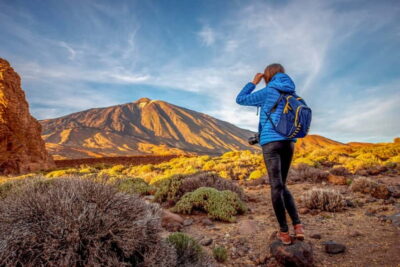
As you walk, you’ll be surrounded by natural scenery and get stunning view moments toward Mount Teide. You don’t need to stare at a volcano all day to feel the connection. The views show up as you rise, turn, and look out from stretches of the trail.
That’s important because it keeps the hike from feeling repetitive. Instead of the same view over and over, you get little “reward” moments that match your physical progress on the trail.
One more practical note: since the terrain is rocky and the walk is active, the views aren’t going to be your main focus the whole time. You’ll look when you can, and that’s fine. The hike is doing two jobs: moving you through the island and giving you time to observe.
Ethnographic elements along the way: what you’re really paying for
This route includes ethnographic elements along the path. That matters because it connects the scenery to people and daily life—how people lived in the rural south and what they built or used.
Even if you don’t speak every local detail, a good guide can translate the significance into something you can actually picture. You’ll understand why certain paths existed where they did, and how the plant life you’re seeing ties into that old rural world.
This is also why I’d avoid rushing. You don’t want this hike to become just “get from start to finish.” Slow down when the guide points things out. Those moments are part of the point.
And honestly, the ethnographic angle is also what makes a paid guided hike feel worthwhile. You’re not paying to be walked somewhere—you’re paying for the interpretations that make the walk meaningful.
Food, water, and breaks: what you should plan for during a 4-hour hike
Food and drinks are not included, so you need to think ahead. With a hike component of about 4 hours, I’d plan on carrying at least water and a simple snack to help you keep energy steady.
One practical consideration from participant feedback: the walk may not include a toilet stop during the hiking portion. The tour doesn’t advertise restroom breaks, so treat this as a “use the facilities before you start” kind of outing.
Also, because the footing can be rocky with constant up-and-down, don’t assume you’ll find easy time to pause. When the trail is uneven, your body is already working. Build a rhythm that includes short pauses when it’s safe and the guide allows.
If you’re prone to needing frequent breaks, that’s a big factor in whether this hike fits you. On this route, comfort can’t be an afterthought.
Price and value: is $65 a fair deal?
At $65 per person for a roughly 6-hour day, you’re paying for more than just walking. You get bus/coach transportation plus a hiking guide and pickup and return to your hotel.
So where’s the value?
- The guide: you’re getting context for endemic plants like tabaibas and cardones and for the ethnographic pieces along the route.
- The access: the bus puts you into the right area without navigating on your own.
- The structure: you’re not guessing where the trail starts or how the day flows.
If you like self-guided hikes, $65 may feel like a lot for “just a trail.” But if you care about understanding what you’re seeing—especially the plant uses and the older survival-route story—that guide-led learning is what justifies the price.
Also, the tour is rated 4.2 based on a small set of reviews. One rating was a perfect score and had no suggested improvements, while another participant flagged the hike’s difficulty and the lack of stops. That tells me you should weigh the physical demands carefully, then the experience value is strong if you’re comfortable on rocky trails.
In short: it’s good value if you’re a hike person who likes learning. If you want gentle scenery with frequent breaks, you’ll likely feel under-served for the cost.
Who should book this hike, and who should skip it
This is not suitable for people over 70. Beyond that age limit, I’d recommend it for hikers who are comfortable walking over stones and managing constant climbs and descents.
It’s also a good match if you want:
- endemic plant learning in the real setting where the plants grow
- a guided trail with ethnographic interpretation
- a walk in the rural south where you can connect Tenerife’s nature with how people once lived there
It may be the wrong fit if you:
- need frequent breaks or want toilet stops during the hike
- dislike rocky, uneven terrain
- want a casual pace with lots of time to stroll and photograph without focusing on footing
The tour description emphasizes natural landscapes and ethnographic elements, but the physical reality matters. If your legs are strong and your expectations match the terrain, you’ll likely enjoy the day a lot more.
Should you book the Tenerife Camino Real hike?
Yes, if you’re the type who likes guided hiking for what it teaches, not just where it takes you. I think this is a solid choice for anyone who wants ancient trail energy, guided plant spotting (tabaibas and cardones), and rural south views with Teide in the background.
I’d say no—or at least “choose another option”—if you’re looking for an easy stroll, lots of restroom breaks, or a long sit-down style outing. The rocky footing and continuous up-and-down can turn this into a harder day than you expect, and that’s the one theme you should respect.
If you’re unsure, check your comfort level with uneven stones and plan to carry water and snacks since food and drinks aren’t included.
FAQ
How long is the Tenerife Camino Real hike?
The total experience time is 6 hours.
How long is the hiking portion?
The hike itself is listed as 4 hours.
Where do you get picked up?
Pickup is included, and you choose from the supplier’s offered pickup options when booking. One listed stop is the bus stop at Av. Antonio Domínguez, 6 by the Sol Arona Hotel in Isla Bonita.
Does the price include transportation?
Yes. The tour includes bus/coach transportation plus pickup and return to your hotel.
Is food or drinks included?
No. Food and drinks are not included.
What languages are available for the guide?
The live guide is available in French, Spanish, English, and German.
How difficult is the hike?
The route is described as a hike on a trail with stones and continuous up-and-down sections. It also isn’t suitable for people over 70.
Is there a toilet stop during the hike?
The tour information doesn’t list toilet stops during the hiking portion, and the hike runs about 4 hours.
Is free cancellation available, and can I reserve now and pay later?
Yes. You can cancel up to 24 hours in advance for a full refund, and you can reserve with a pay-later option.
More Hiking & Trekking in Los Cristianos
- Tenerife : Teide Hiking
★ 4.5 · 11 reviews
More Tour Reviews in Los Cristianos
- Tenerife : Teide Hiking
★ 4.5 · 11 reviews - Los Cristianos: Basic Diver Course
★ 5.0 · 4 reviews - Tenerife: Whale tour and sea swim on a yacht for 22 people
★ 4.9 · 4 reviews - Los Cristianos: 100% FullMotion SIMRACING for groups or individuals
★ 5.0 · 3 reviews
More Tenerife Trails
- Tenerife : Teide Hiking
★ 4.5 · 11 reviews
Just Added: Fresh Tenerife Reviews


Hiking & Trekking Trails, compared.
 ★ 4.3Mount Teide Summit Hiking Adventure with Cable CarFrom $160688 reviews
 ★ 4.8From South Tenerife: Mount Teide Hiking Day Trip & Cable CarFrom $169482 reviews
 ★ 5.0Anaga Mountains & Enchanted Forest Hiking TourFrom $122303 reviews
 ★ 4.9Hike Above Masca in Enchanted Forest with Pick-upFrom $104294 reviews
 ★ 4.5Tenerife Barranco de Masca: Guided hike + boat ride + transportFrom $171258 reviews
 ★ 5.0Hiking in Tenerife’s Great OutdoorsFrom $72241 reviews
 ★ 5.0Underwater Walk – Sea Trek ExperienceFrom $90237 reviews
 ★ 4.8Cruz del Carmen: Hiking in Anaga with Local Food ProductsFrom $65198 reviews
Browse the lists this tour appears in